
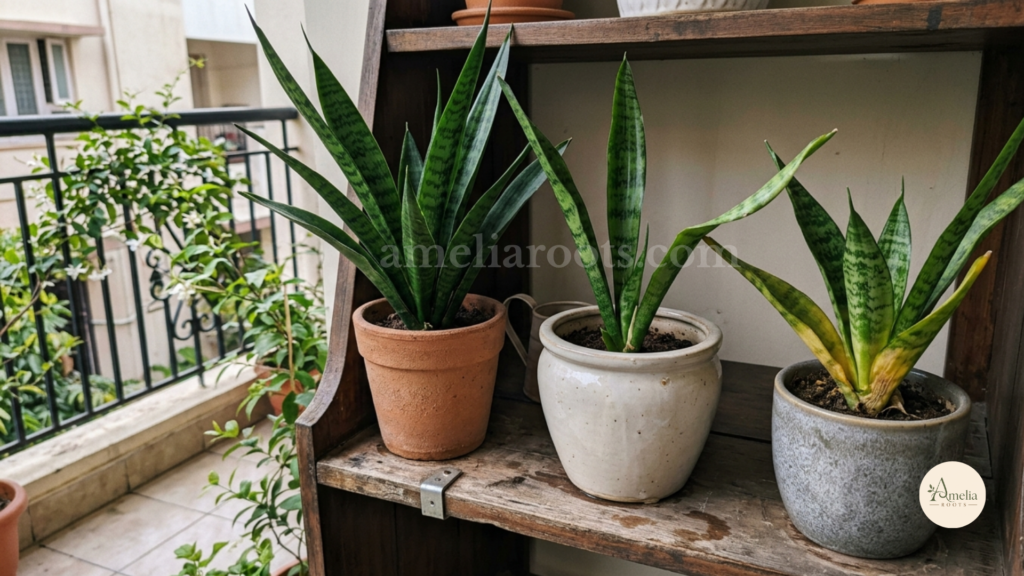
Three snake plants. Same shelf. Same light. Same bag of soil.
Two are alive.
Two aren’t.
The difference wasn’t attention. It was the pot underneath. And how long the soil inside it stayed wet after I watered.
Nobody tells you that part.
Snake plants get sold as beginner-proof. Low light, forget to water it, it’ll be fine. Half of that’s true.
The other half is exactly why so many of them die within a year of coming home.
They don’t die from neglect. They die from care aimed at the wrong problem. Watering on a Sunday schedule instead of checking the soil. Sitting in a pot with nowhere for water to go. Parked in a corner too dim to actually grow in.
This is what I’ve worked out the hard way. Light, watering, soil, repotting, feeding. What to do the second you see a mushy leaf. How propagation actually goes when you try it yourself instead of just reading about it.
Quick answer: Bright, indirect light. Water only when the soil is bone dry. Gritty, fast-draining soil. Almost no fertilizer. Most snake plant deaths come from one thing — soil that stays wet too long.
At a Glance
| Factor | What it needs |
|---|---|
| Light | Bright, indirect — tolerates low light, won’t grow in it |
| Water | Only when soil is bone dry, roughly every 3–6 weeks |
| Soil | Gritty, fast-draining mix |
| Pot | Terracotta, with drainage, barely bigger than the roots |
| Temperature | 60–85°F, no cold drafts |
| Fertilizer | A few times a year. None in winter |
| Toxicity | Mildly toxic to cats and dogs |
Swipe left or right to view the full table →
The “Low Light Plant” Label Is a Half-Truth
Snake plants come from rocky, sun-baked parts of West Africa. Almost no shade there.
That’s not a plant built for a dark hallway.
What it can do is survive one. Not grow. Survive.
I kept one in a north-facing corner for close to a year. It didn’t die.
It also didn’t put out a single new leaf.
Moved it a few feet over. Somewhere it got real indirect light most of the day.
Three weeks later, thicker growth. Leaves standing up straight instead of leaning at the window.
If your plant’s leaves are long, thin, pale, or leaning hard in one direction — that’s not personality. That’s it stretching toward light it isn’t getting. Growers call it etiolation.
Direct afternoon sun isn’t the fix either. Can scorch the leaves just as fast.
A few feet back from an east or west window. That’s usually the spot.
Side note, if your plant tag says something different than what the nursery called it. Botanists moved snake plants out of the Sansevieria genus and into Dracaena a few years back, based on genetic testing. Most garden centers never updated the tags. The plant didn’t change. The label just caught up late.
Watering Is the One Rule That Actually Matters
If one sentence could’ve saved my first snake plant, it’s this.
When in doubt, don’t water.
The leaves store water like a succulent’s do. That’s the whole reason a fixed schedule is the wrong move. This plant isn’t running on a calendar. It’s running on how much water is already sitting inside it.
The Royal Horticultural Society lists overwatering, not neglect, as the top houseplant killer across nearly every species they cover. Snake plants aren’t the exception. If anything, they’re the clearest case of it.
I check the leaves before anything else. Ready for water looks like a very slight wrinkle. A little deflated.
That’s the signal. Not a date on a calendar.
Usually lands somewhere between three and six weeks. Winter stretches it further — sometimes past two months, because growth slows down and the plant just isn’t using much.
When you do water, do it properly. Soak until it runs out the drainage hole. Let it fully drain. Never let it sit in a saucer of water. Even a day is enough to start trouble.
Quick way to tell what’s wrong:
| Symptom | Likely Cause |
|---|---|
| Soft, mushy, yellowing leaves | Overwatering |
| Crispy, curling, brown tips | Underwatering or too much sun |
One more habit. Don’t let water pool in the crown — where the leaves meet the soil. That alone can start rot even when everything else you’re doing is right.
Where Root Rot Actually Starts
Didn’t get this until I pulled a rotting plant out and smelled the soil.
Watering frequency usually isn’t the problem.
It’s the soil holding onto water too long.
I’ve seen plants watered every couple of months still end up with black, mushy roots. Because the soil mix never let that water go in the first place.
You can do everything right with the watering can. Still lose the plant if the mix underneath is fighting you.
Fix is a mix that drains fast. Roughly two-thirds regular potting soil, one-third coarse material — perlite, pumice, or coarse sand. Should look a little rough. Gritty, not fluffy.
Pot matters just as much.
Switched from plastic to unglazed terracotta after noticing the soil in my plastic pots stayed damp for days longer than the terracotta ones right next to them. Same shelf, same water, same day.
Terracotta’s porous. Moisture leaves through the sides, not just off the top.
Whatever pot you use — drainage holes aren’t optional. A decorative pot without one is fine as an outer shell. The nursery pot sits inside it. The roots themselves should never sit directly in something with no way out for water.
Repotting: Do It Less Than You’d Think
Most houseplant habits say repot every year.
With a snake plant, that instinct works against you.
These do better a little crowded. A pot with too much extra soil around the roots just holds moisture in space the roots haven’t reached yet. Same rot risk as above.
Wait until roots are visibly pushing out the drainage holes. Or the pot’s cracked from root pressure.
Until then, leave it alone.
When it’s time, go up one to two inches. Nothing more. A pot noticeably bigger than the root ball just means more soil holding more water than the plant can use.
Fertilizing: Doing Less Is the Safer Call
Slow growers. Low demand. The feeding needs match that.
Light, balanced fertilizer, diluted to a quarter or half strength. A few times during the growing season. That’s plenty.
Skip it completely in winter. No growth happening, no real use for it.
Overfeeding shows up as crispy, browned tips. Gets mistaken for underwatering more than it should.
Feeding regularly and still seeing tip burn? Cut back the fertilizer first. Not the water.
The Moment You See a Mushy Leaf
Almost everyone hits this eventually.
Worth slowing down for, because catching it early is the difference between saving the plant and starting over.
First sign is usually a leaf gone soft near the base. Sometimes yellowish, a little translucent. Even when the rest of the plant looks fine.
Can happen even on plants watered infrequently. That’s the part that throws people off.
They assume rot only comes from overwatering on a tight schedule. It doesn’t. Comes from soil holding moisture against the roots too long, however often you were watering.
Here’s what I actually do the second I spot it.
- Pull it out of the pot. Look at what’s happening underground, not just the leaves.
- Smell the soil and the roots. Healthy smells like dirt. Rotting smells sour, almost like spoiled vegetables.
- Check the roots by feel. Healthy is firm and pale. Rotting is soft, brown or black.
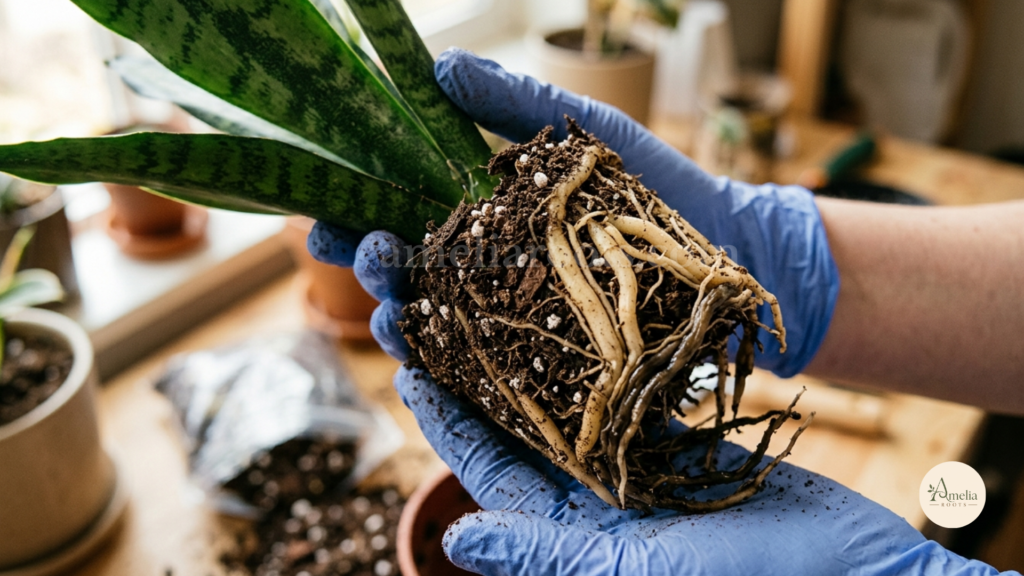
- Cut away anything soft or discolored. Clean blade. Leave nothing rotted behind.
- Spray what’s left with diluted hydrogen peroxide and dish soap. Stops the spread.
- Let it dry out completely for 24 hours. Uncovered. Out of direct sun.
- Repot into fresh, dry, fast-draining soil. Terracotta if you’ve got it. No watering until it’s fully dry again.
Catch it here, most plants come back fully.
Wait too long — most of the roots gone soft — and you’re usually better off taking healthy leaf cuttings and starting over.
This is exactly the moment you don’t want to be scrolling five tabs while soil dries on your counter.
I put together the Indoor Plant SOS Guide for this. Fast, symptom-based, figure out what’s wrong and what to do about it in the next ten minutes. Not after a week of guessing.
Propagation: What Actually Roots, and What Just Rots
Timeline expectations trip people up more than the technique does.
Water propagation looks appealing. You watch the roots form. Tried it early on — cut sections at an angle, stood them in a jar.
Some rooted fine. Others rotted before they got the chance. Mostly because I wasn’t changing the water often enough.
Soil propagation’s been far more reliable. What I default to now.
The real difference-maker: let the cut end callous first. Dry out in open air for one to three days before it touches soil. Skip that step and you’re planting an open wound into damp material. Close to a guaranteed way to lose it.
Nobody sets the timeline right, so here it is straight.
Rooting takes two to three weeks. Actual pups take another two to three months to form. Those pups need a couple more months after that before they’re big enough to separate.
Six months, roughly, from cutting to something you’d call established.
Most people give up around week four, assuming it failed. That’s usually right around when it was starting to work.
Mistakes That Quietly Kill Snake Plants
Watering by the calendar instead of the plant. My own mistake. Still the most common one out there.
The wrong pot for your home’s humidity. Plastic isn’t automatically wrong. But if your space runs humid, or you tend to water generously, it removes your margin for error completely.
Water sitting in the crown. Even a careful routine can cause rot if it keeps pooling there.
Cold drafts near a window. Genuinely cold in winter, and you’ll see damaged, discolored leaves that have nothing to do with light or water at all.
Pests during a weak spell. Mealybugs and thrips rarely bother a healthy plant. They show up once it’s already stressed, usually from overwatering. Cotton swab with rubbing alcohol for small outbreaks. Neem oil for anything bigger.
Where to Actually Put One
A few feet back from an east or west window, out of direct afternoon sun. That’s usually the right spot.
They hold up better in lower-light rooms too — bedrooms, offices — than most houseplants. That’s exactly where the “low light plant” reputation comes from.
Just go in expecting slow, steady presence there. Not real growth.
Worth mentioning while we’re here. Snake plants were among the species tested in NASA’s often-cited 1989 Clean Air Study — how much airborne pollutant a handful of common houseplants could pull out of the air inside a sealed chamber.
Real study. But that result came from a sealed lab, not an open room in your house.
One plant on a shelf isn’t cleaning the air you’re breathing. Nice bit of trivia. Gets stretched further than the data actually supports.
Frequently Asked Questions
How often should you actually water a snake plant?
Check the soil and the leaves, not a fixed number. Water only when the soil’s completely dry and the leaves show the faintest wrinkle. Usually three to six weeks. Longer in winter.
Can a snake plant survive in a room with no windows?
For a while, yes. Won’t grow, though. No natural light means growth stalls out almost completely, and the plant gets more prone to problems over time. A bright grow light can substitute if that’s not an option.
Is it normal for the leaves to look a little floppy?
Not really. Usually means too little light, sometimes paired with overwatering that’s softened the base. Healthy leaves stand up firm.
How do I know if root rot’s gone too far to save the plant?
Most of the root system soft and dark, barely any firm, pale root left? Better off taking healthy leaf cuttings and starting fresh through propagation.
Do snake plants need repotting every year?
No. Doing it yearly tends to cause more harm than good. Repot only when roots are visibly pushing out the drainage holes, or the pot’s cracked from root pressure.
How long does propagation really take?
Around six months from cutting to an established young plant. Rooting starts in two to three weeks. Pups take another two to three months. Those pups need a couple more months before they’re ready to pot separately.
Stop watering on a schedule. Start reading the plant instead.
Once that shifts, most of what gets called a “snake plant problem” stops happening in the first place.
Next time something looks off and you want a faster way through it — the Indoor Plant SOS Guide walks through this same symptom-first troubleshooting. So you’re not starting from scratch when a plant needs help.

Content writer and SEO specialist with 3+ years of experience in research-driven digital content. At Amelia Roots, he turns carefully researched indoor gardening information into clear, practical guidance for houseplant owners and home gardeners. His work combines content research, search intent, and reader-focused writing with the site's editorial and subject-matter review process.