
If you water your snake plant on a fixed day, the soil near the bottom of the pot is probably still wet when you do.
I found that out the hard way. I watered every two weeks, the top inch always looked dry, and I thought I was being careful. Then I slid one plant out of its pot and the lower half of the root ball was soaked.
Quick answer: Most indoor snake plants need water every 2–3 weeks in spring and summer, and every 4–6 weeks in fall and winter. But water only when the entire pot is dry, not just the surface.
That range is a starting point. What actually protects the plant is knowing when the soil is dry enough.
This guide shows you how I check, how I water, what changes the timing in a normal US home, and how to tell an overwatered snake plant from a thirsty one. It covers watering only. Light, soil and repotting come up only where they change how fast the pot dries.
Snake Plant Watering Schedule: Where I Start
Use this table to decide how soon to start checking, not when to pour.
| Your Setup | Typical Gap Between Waterings | Why |
|---|---|---|
| Bright light, warm room, small terracotta pot | 1–2 weeks | Soil and clay both dry fast |
| Normal indoor light, plastic or glazed pot | 2–3 weeks | The most common rhythm I see |
| Low light, large pot, plastic | 4–6 weeks | Soil stays wet far longer |
| Winter, cool room, low light | 4–8 weeks, sometimes longer | The plant barely uses water |
| Small plant in a big pot | Add a week or more | Extra soil holds extra water |
Healthy snake plants live on every rhythm in that table. I’ve seen them watered weekly in summer and barely at all in winter, and some owners with several large plants water only every few months. The same interval can be right in one home and wrong in the next.
That’s why I stopped asking “how many days” and started asking “is the whole pot dry?”
How to Tell When Snake Plant Soil Is Dry Enough
The top inch of soil is the least reliable part of the pot. It dries first, so it makes a wet plant look thirsty.
What matters is the bottom half, where the roots sit and where rot starts. I never trust the surface alone. I use three checks, and I water only when at least two of them agree.
1. The chopstick test

Push a wooden chopstick or skewer all the way to the bottom of the pot. Pull it out slowly and look.
- Dark, damp, or soil clinging to it: wait.
- Clean, dry and pale: the pot is ready.
It’s the cheapest check I know, and it’s the only one that tells you about the bottom of the pot.
2. The weight test
Lift the pot the day you water it, so you remember how heavy it feels. A few weeks later, lift it again. A pot that feels much lighter has dried out through the middle.
This works best in lightweight plastic nursery pots. In a heavy ceramic pot, I lean on the chopstick instead.
3. The soil edge
When the soil starts shrinking away from the sides of the pot, it has dried deeply. I use this as my cue to start checking more carefully, not as a reason to water on its own.
What about the leaves?
Firm, stiff leaves mean the plant is fine. Slight wrinkling or softness can mean thirst, but I never act on it alone. I confirm it with the soil first, because mushy leaves can mean the opposite problem.
A moisture meter is optional. In a deep pot it can help, but I only trust it when it reads near the bottom of its range, and I still back it up with the chopstick.
My rule: if I’m debating whether it’s dry, it isn’t. I wait another week.
Some growers wait until the leaves wrinkle before watering. I don’t. By then the plant is already stressed, and a snake plant is much happier with a long dry spell than with soil that never dries.
How I Water a Snake Plant
When the soil passes the check, I water deeply. Small sips are the habit I’d drop first.
- Pour slowly until water runs freely out of the drainage holes.
- Keep the water on the soil, not in the center of the plant where the leaves meet.
- Let it drain completely.
- Empty the saucer or decorative outer pot within a few minutes.
- Leave it alone. Recheck in about a week, not tomorrow.

Sips fail because they wet only the top of the soil. The surface stays damp, the roots stay dry, and you end up with the worst version of both.
When the soil has gone hard. If water runs straight down the side of the pot and the soil stays dry, the mix has stopped absorbing. I set the pot in a tray of water until the soil is damp all the way through, then let it drain fully. Clemson’s extension team suggests the double watering method for soil that’s become hard to rewet. Both get water into the root zone. I use bottom soaking as a repair, not a habit, because some growers find it doesn’t wet the top of the root zone well.
I also don’t mist. A snake plant doesn’t need humidity, and misting does nothing for the roots.
What Changes How Often You Water a Snake Plant
Two owners can follow the same advice and get opposite results. Six things move the timing, and each one changes how fast the pot dries.
| Factor | Water more often when | Water less often when |
|---|---|---|
| Light | Bright window | Dim corner or low light |
| Temperature | Warm room | Cool room |
| Pot material | Terracotta or clay | Plastic or glazed ceramic |
| Pot size | Large plant in a small pot | Small plant in a big pot |
| Soil | Gritty, fast-draining mix | Dense, moisture-holding mix |
| Season | Spring and summer | Fall and winter |
Two of these matter more than people expect.
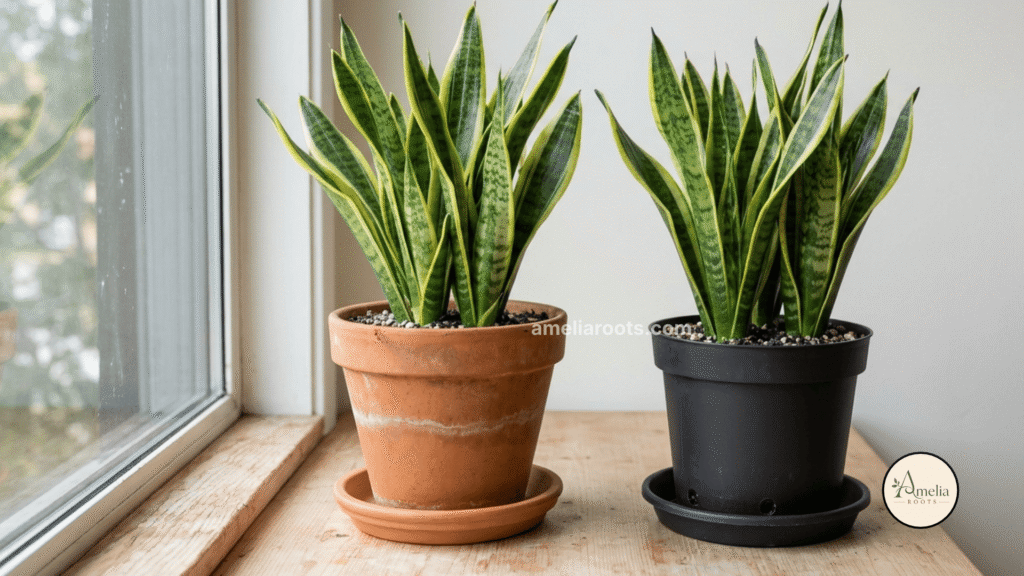
Pot material. Terracotta pulls moisture out of the soil. A snake plant in a terracotta pot can need water every 1–2 weeks, while the same plant in a plastic pot stays wet much longer. When I move a plant between the two, I reset my expectations.
Soil. Plants from a garden center often come in dense soil that stays wet long after the surface looks dry. If a plant is in that mix, a watering schedule can’t save it. It needs repotting into something airier first. I cover what to use in my cactus soil mix guide.
There’s also the US factor. Winter heating and summer air conditioning both change how fast soil dries, and a plant near a vent or cold window behaves differently from one in the middle of the room. The same plant can run on a different rhythm in January than in July.
A snake plant forgives a lot. A shelf of different plants doesn’t. One wants water in a week, another in five, and by the third plant most of us are guessing from memory. That’s how a plant gets watered twice in a row, or not at all.
That’s the problem the Indoor Plants Care Kit is for. It takes the guessing out of caring for the plants you actually own.
Snake Plant Winter Watering: Slow Down More Than Feels Right
Winter is where most snake plants get hurt. The room feels dry from the heating, so it seems logical that the soil is drying too.
Only the surface is. With less light and cooler air, the plant uses very little water, and the lower soil stays wet for weeks.
So I keep the weekly check and drop the watering. In winter I expect a gap of 4–8 weeks, and sometimes longer. Growers I trust water about monthly in humid homes, and some give a healthy plant nothing at all through the coldest months.
A fully dry pot in January with firm leaves is not an emergency. Don’t try to catch up. If you want the month-by-month breakdown, I cover it in my snake plant watering by season.
Overwatered or Underwatered Snake Plant? Read the Soil First
This is the part that trips up most people: overwatering and underwatering can look similar, because both damage the roots. A wrinkled leaf can mean thirst. A mushy one can mean rot. Same plant, opposite problem.
So I check the soil before I read the leaves.
| What you see | What it usually means | What I check | What I do |
|---|---|---|---|
| Yellow, soft, falling leaves | Too wet, or too little light | Chopstick at the bottom | Stop watering, improve light and drainage |
| Mushy base, sour smell | Root rot | Slide the plant out and look at the roots | Follow the rescue steps below |
| Wrinkled, thin, slightly soft leaves | Thirst, if the soil is truly dry | Is the whole pot dry? | Soak thoroughly, then back to the routine |
| Brown, crispy tips | Dry air, underwatering, mineral buildup or too wet | Soil first | Don’t change the schedule on tips alone |
| Leaves bending or falling over | A weak base from frequent watering, or severe dryness | How often I’ve been watering | Check soil and base firmness |
| Soil wet for weeks | Dense soil, oversized pot, low light or poor drainage | Pot size and drainage | Repot into an airy mix and water less |
| Looks fine but the soil is dry | Normal drought tolerance | Nothing | Wait, don’t panic-water |
When someone tells me their snake plant is drooping, my first question is always the same: how often do you water it?
If you think it’s root rot
Root rot shows up as a bad smell or soft, brown roots. Healthy roots are white and firm.
- Stop watering.
- Take the plant out of the pot and shake off the loose soil.
- Cut away anything black, brown or mushy with clean scissors.
- Repot in dry, fast-draining mix, in a pot with drainage holes.
- Don’t water again until the soil is truly dry.
A few rotten roots among mostly healthy ones are recoverable. If the base itself is mushy, the odds drop sharply.
If it’s actually thirsty
Snake plants handle drought well, but I don’t treat them like cacti. Leaving one bone-dry for months can stall its growth. If the soil is completely dry and the leaves are wrinkled, I soak it properly and go back to checking weekly.
5 Habits That Quietly Cause Most Overwatered Snake Plants
Overwatering is rarely about how much you pour at once. It’s watering again before the roots have dried, or using soil that stays wet too long. These are the habits behind most of the damage I see.
1. Watering every two weeks, no matter what. This was mine. It’s fine for a small plant in a bright room and too often for a large plant in average light. Fix: let the soil decide.
2. Leaving water in the saucer. The roots sit in runoff and never get to dry. Fix: empty it within minutes, every time.
3. Keeping the plant in dense nursery soil. The mix stays wet long after the surface looks dry, so even infrequent watering can rot the roots. Fix: repot into a chunkier, faster-draining mix.
4. Using a pot with no drainage hole. This is a bigger risk than an occasional thorough watering. Fix: use it as a decorative outer pot only, and keep the plant in a pot with holes inside it.
5. Using a self-watering pot. The reservoir can keep the root zone damp all the time. I avoid them for snake plants.
My Routine: Check Weekly, Water Rarely
I put the check on my calendar, not the watering. That one change made the difference for me.
- Pick one day a week to check, not to water.
- Push a chopstick to the bottom of the pot.
- Lift the pot and compare it with how heavy it felt after the last watering.
- If the checks say dry, water deeply. If not, leave it and check again next week.
- Let it drain and empty the saucer.
- In winter, keep checking and expect to water far less.
Snake Plant Watering FAQ
Can I water my snake plant every week?
Sometimes. A small plant in terracotta, in a bright warm spot, can handle it. In a large plastic pot, dense soil, low light or winter, weekly is risky. Check the soil rather than the calendar.
How long can a snake plant go without water?
A healthy plant in normal indoor light handles a month easily, and some owners go two to three months. I don’t aim for that, though. Long stretches of bone-dry soil can stall growth.
How do I know my snake plant needs water?
The chopstick comes out clean and dry, the pot feels light, and the soil has pulled slightly from the edge. Slight wrinkling or softness in the leaves supports it, but confirm with the soil first.
How often should I water a snake plant in winter?
Usually every 4–8 weeks, and sometimes longer. Keep checking weekly, but expect the soil to stay wet far longer than it does in summer.
Can an overwatered snake plant recover?
If you catch it early, yes. Stop watering, let the soil dry fully, and check the roots. A few rotten roots can be trimmed. If the base is mushy and most roots are gone, recovery is unlikely.
Should I mist my snake plant?
No. It doesn’t need extra humidity, and misting doesn’t reach the roots.
What soil is best for a snake plant?
A fast-draining mix. A cactus or succulent mix works, or regular potting soil loosened with perlite or coarse sand. The soil should dry quickly after watering.
How much water should I give it?
Enough that it runs freely out of the bottom of the pot. Pour slowly, let it drain, then empty the saucer.
Is a moisture meter worth it?
It can help in a deep pot, but it’s optional. I only trust a reading near the bottom of its range, and the chopstick is cheaper and checks the bottom of the pot.
The Short Version
That pot I tipped out taught me the rule I still use: let it dry all the way, soak it properly, then leave it alone.
The number of days matters far less than whether the lower half of the pot is dry. Check weekly, water rarely, and don’t be afraid of a long gap.
Sources
- Indoor Plants: Watering, Clemson Home & Garden Information Center
- Common Houseplant Care, West Virginia University Extension

Content writer and SEO specialist with 3+ years of experience in research-driven digital content. At Amelia Roots, he turns carefully researched indoor gardening information into clear, practical guidance for houseplant owners and home gardeners. His work combines content research, search intent, and reader-focused writing with the site's editorial and subject-matter review process.