
I’ve lost bathroom plants to darkness. I’ve lost far more of them to a watering can.
That’s the part most guides skip. They stamp a plant “low light” and move on, as if steam did the rest.
It doesn’t.
In a dim, humid room, soil stays wet for weeks. The plant slows down, stops drinking, and rots from the roots up. Oregon State University Extension puts it plainly: overwatering kills more houseplants than underwatering.
So this list works differently.
For each of the 10 best plants for a low light bathroom, I’ll show you how it usually dies there, and what I’d do instead.
You’ll also get a 30-second light test, a grow light setup for windowless rooms, and the plants worth skipping.
What I won’t cover: bathrooms with no airflow at all. That’s a mold problem first.
The Short Answer
Almost no light: ZZ plant, snake plant, or cast iron plant.
A small window: pothos, philodendron, or peace lily.
No window at all: any of them, but only with a grow light. The Royal Horticultural Society says bathrooms suit tropical plants when enough light reaches them, and a windowless room needs artificial light.
Do the 30-Second Light Test
Go in during the day. Switch the light off. Look around.
- You can still see clearly: real low light. Every plant below can work.
- It’s dim and gray: a frosted window. Pick pothos, philodendron, or peace lily.
- It’s black: no daylight. Only a grow light keeps a plant healthy here.
Low light roughly means enough to read by. NPR’s houseplant guide, drawing on extension experts, stresses that low light is not no light.
One free boost: leave the door open when you’re not using the room.
Three Ways a Bathroom Kills a Plant
Almost every failure I see traces back to one of these.
1. Not enough light. Stems stretch. Leaves go pale. Nothing new grows.
2. Too much water. Lower leaves turn yellow. The base goes mushy. The soil is still damp two weeks later. University of Maryland Extension calls overwatering the number one killer of houseplants.
3. The wrong air. Ferns and calatheas get crispy brown edges when a rarely used bathroom swings from steamy to dry.
Here’s the cruel part. The symptoms overlap.
Yellow leaves can mean wet roots or dim light. You change one thing, wait three weeks, and still can’t tell what helped.
That’s how most plants get lost. Not from neglect. From fixing the wrong problem.
If one of yours is already struggling, start with the Indoor Plants Care Kit. It’s there to help you work through a struggling plant in order, so you stop guessing.
Grab the Indoor Plants Care Kit — it’s free.
The 10 Best Plants for a Low Light Bathroom, and How Each One Dies
They’re ordered from most to least dim-tolerant. Here’s the quick view first.
| Plant | Dimmest Room It Handles | Pets |
|---|---|---|
| ZZ plant | Windowless, with a grow light | Toxic |
| Snake plant | Windowless, with a grow light | Toxic |
| Cast iron plant | Windowless, with a grow light | Non-toxic |
| Pothos | Small or frosted window | Toxic |
| Heartleaf philodendron | Small or frosted window | Toxic |
| Peace lily | Small or frosted window | Toxic |
| Chinese evergreen | Small or frosted window | Toxic |
| Spider plant | Frosted window or bulb | Non-toxic |
| Bird’s nest fern | Small window or grow light | Non-toxic |
| Calathea | Bright indirect light or grow light | Non-toxic |
The ASPCA lists the cast iron plant, spider plant, and calathea as non-toxic to cats and dogs. Bird’s nest fern is generally considered safe, but check with your vet. Treat the rest as toxic.
1. ZZ Plant
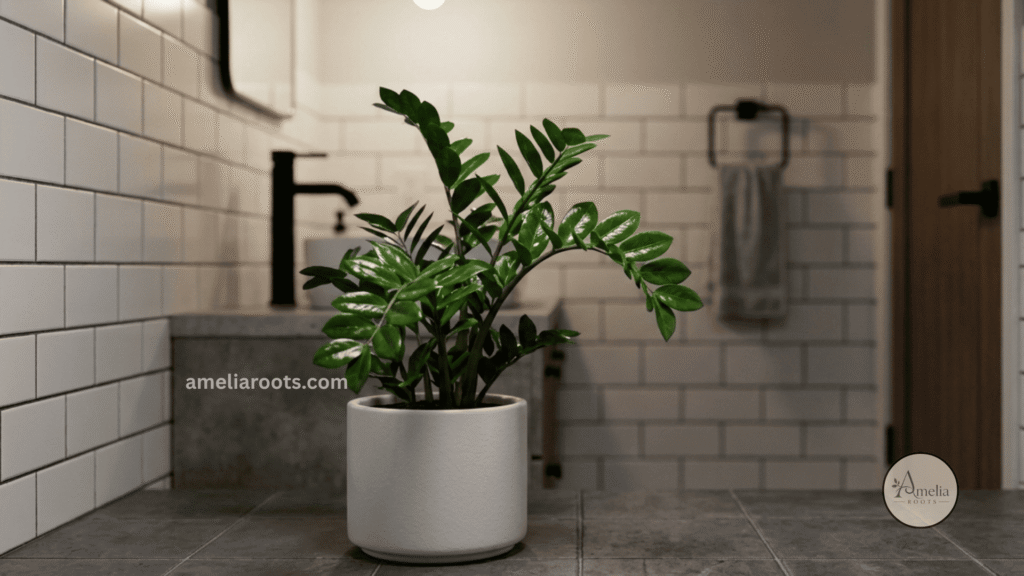
Windowless with a grow light · Toxic to pets
How it dies here: Rot. Its thick underground stems store water, so a humid room plus a “normal” watering routine drowns it.
What I do instead: I wait until the soil is dry most of the way down. In a dim bathroom, that’s often every three to four weeks.
2. Snake Plant
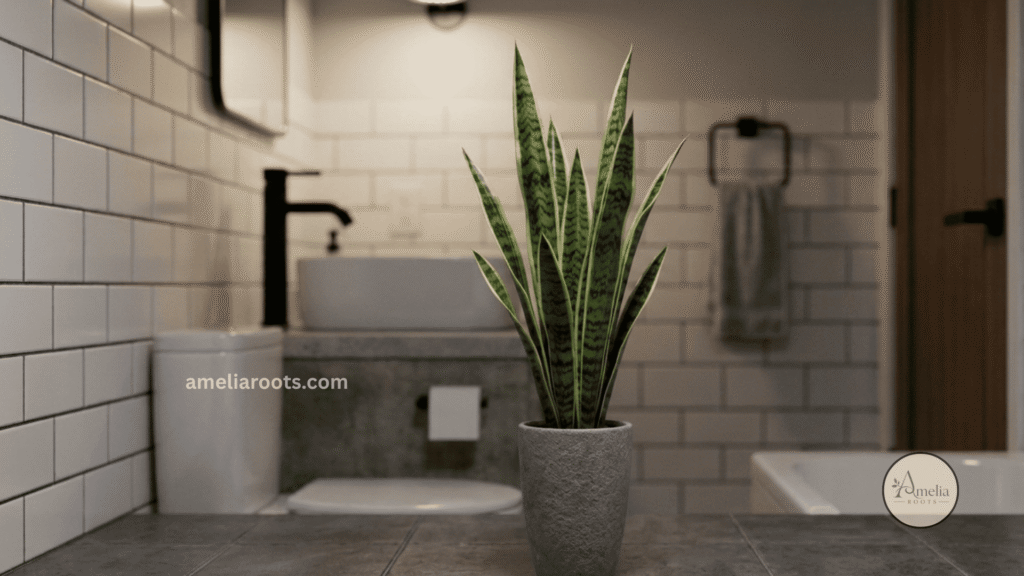
Windowless with a grow light · Toxic to pets
How it dies here: The same rot as the ZZ, plus a room that’s truly black. It tolerates low light, not no light. Oregon State lists it among low-light houseplants.
What I do instead: I water only when the soil is fully dry, and add a small bulb if there’s no window.
3. Cast Iron Plant
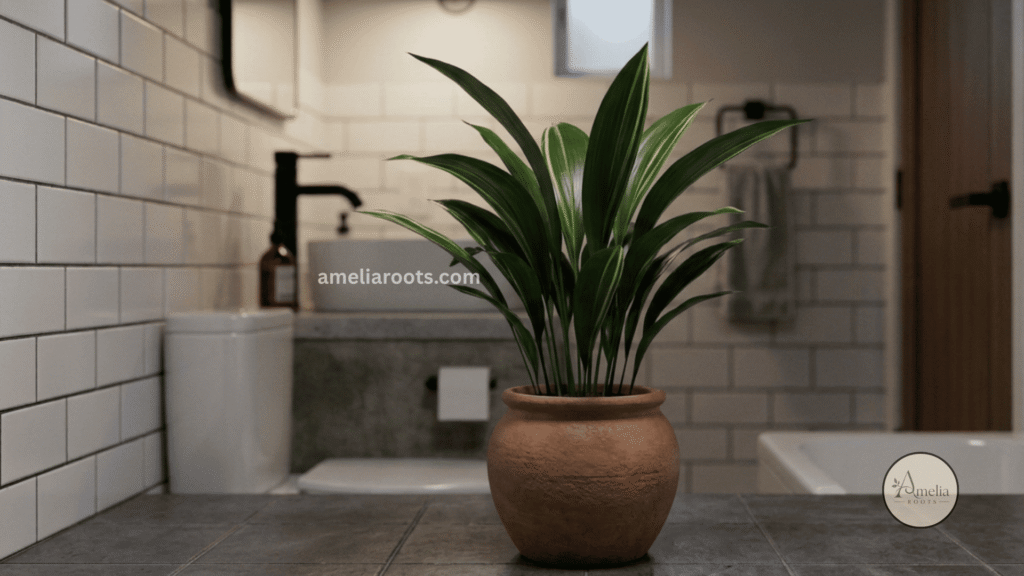
Windowless with a grow light · Non-toxic to pets
How it dies here: Rarely. The only trouble I’ve seen is scorched leaves from direct sun. It’s the plant I’d hand to anyone who’s already lost three.
What I do instead: Use a big pot, let the top inch dry, and accept slow growth.
4. Pothos
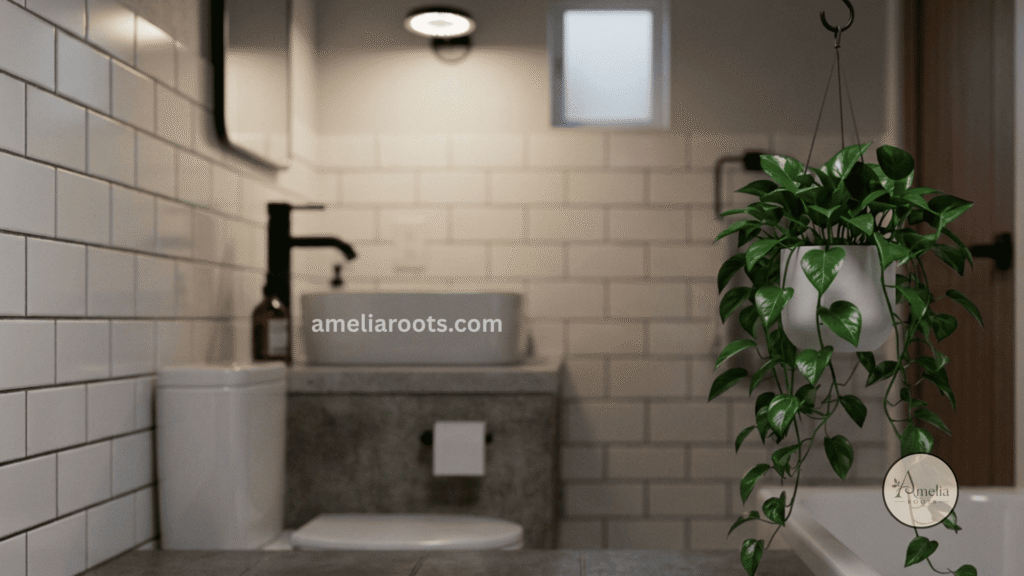
Small or frosted window · Toxic to pets
How it dies here: Slowly, by stretching. The vines go bare, the leaves space out, and any variegation fades.
What I do instead: I pick solid green types for dim rooms, rotate the pot every few weeks, and hang it high, away from pets. Water when the top inch or two is dry.
5. Heartleaf Philodendron
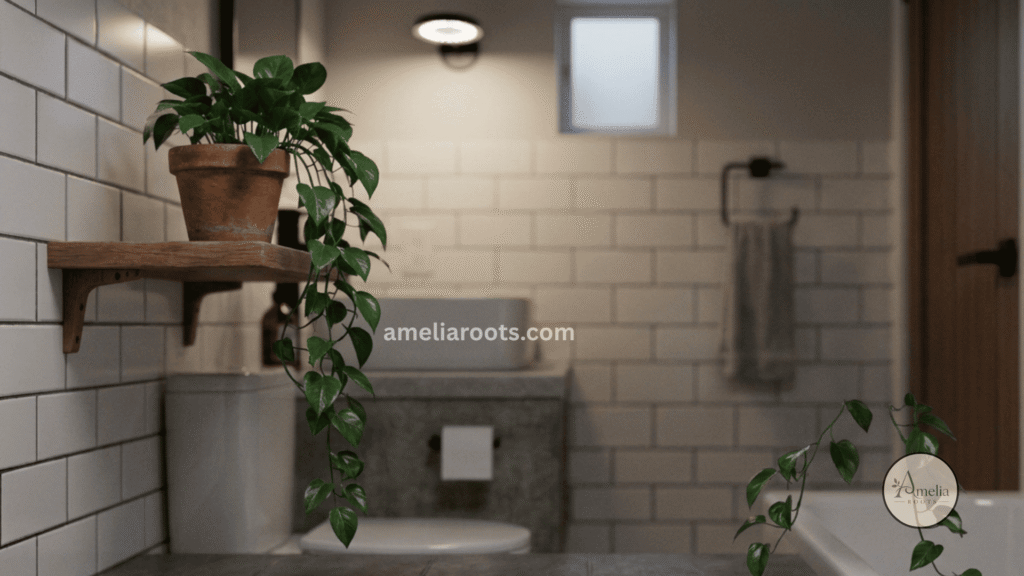
Small or frosted window · Toxic to pets
How it dies here: The same stretch as pothos. The lime-streaked ‘Brasil’ loses its stripe in dim rooms.
What I do instead: Plain green heartleaf for dim spots. I save the streaked type for a bathroom with a window.
6. Peace Lily
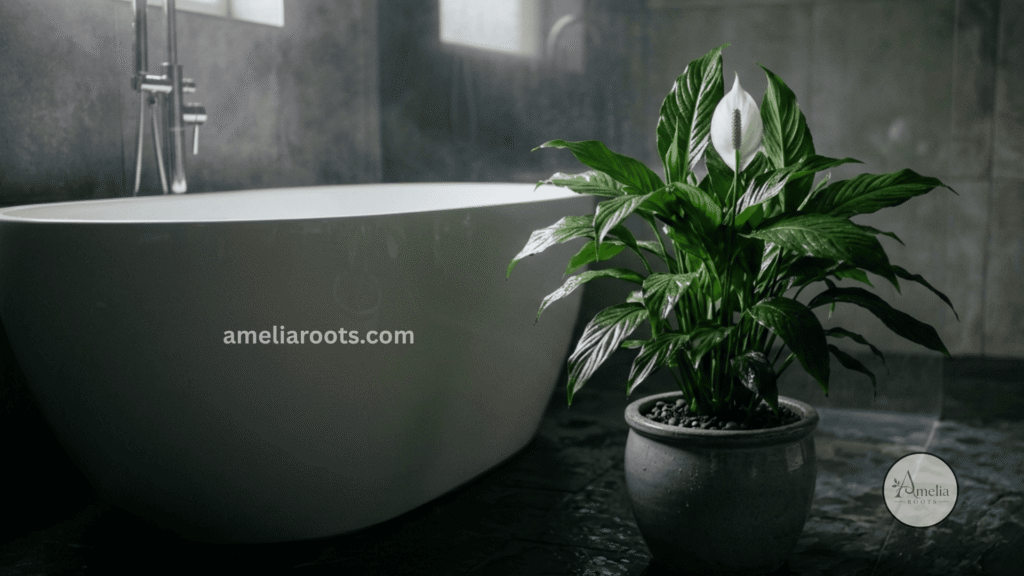
Small or frosted window · Toxic to pets
How it dies here: It gets ignored through a droop, then drowned to make up for it. It sags when thirsty and perks up within hours of a drink, so it tells you exactly when.
What I do instead: Water at the first droop. Expect few flowers in dim light, since Oregon State rates it for low to medium light.
7. Chinese Evergreen
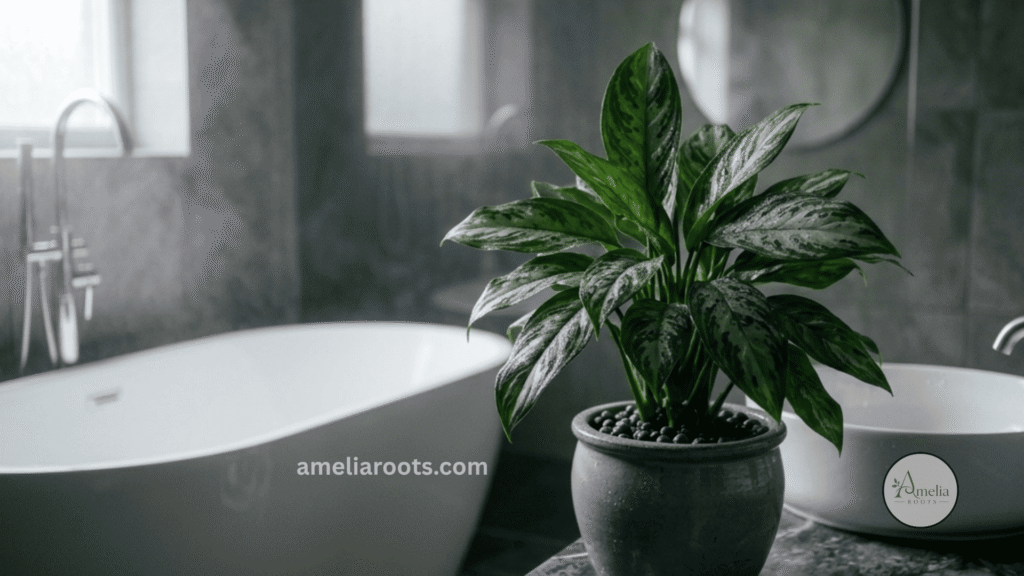
Small or frosted window · Toxic to pets
How it dies here: Color loss and cold. Pink and red varieties fade to green in a dim room, and winter drafts hurt them.
What I do instead: Dark green types like ‘Maria’ handle low light best. Keep it off cold sills.
8. Spider Plant
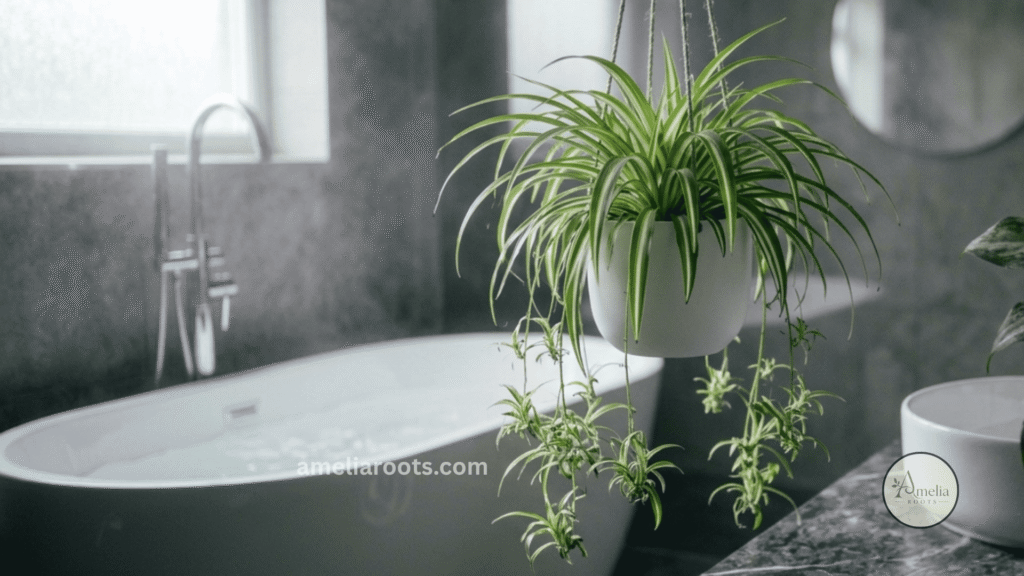
Frosted window or bulb · Non-toxic to pets
How it dies here: It thins and pales in a truly dim room. Oregon State places spider plants in bright indirect light, which surprises people.
What I do instead: Hang it near a frosted window, or under a bulb. Brown tips usually mean uneven watering or mineral-heavy tap water.
9. Bird’s Nest Fern
Small window or grow light · Generally non-toxic
How it dies here: Water pooling in the center of the rosette rots the crown. Dry spells between showers crisp the edges.
What I do instead: Water around the edge, keep the soil evenly moist, and use it in a bathroom that gets steamy daily.
10. Calathea
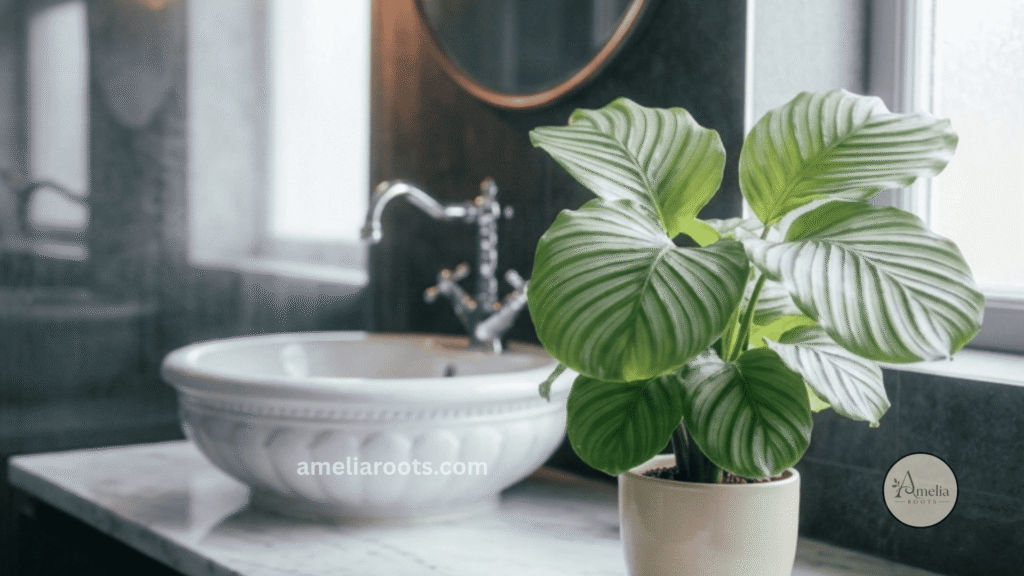
Bright indirect light or grow light · Non-toxic to pets
How it dies here: Dim, dry air. Leaves curl, edges crisp, and the plant sulks.
What I do instead: It’s the hardest plant on this list. I’d only use it in a steamy, daily-use bathroom with a window or a full-spectrum bulb. If the edges crisp, try filtered water.
Tip: the two-knuckle test. Push a finger into the soil up to the second knuckle, or lift the pot. Oregon State Extension recommends both methods. If it’s damp or heavy, wait.
No Window? Light It Like This
A full-spectrum bulb on a timer is the simplest fix.
- Pick a “full-spectrum” or “daylight” bulb. A plain warm bulb gives slow, weak growth.
- Put it above the plant. Iowa State University Extension suggests a full-spectrum LED about 18 inches from the foliage, with at least 3,000 lumens, running 14 hours a day. For a small bulb, follow the box.
- Use a timer. The same source says home growers should stay between 10 and 16 hours. I’d start at 12.
- Aim it at the plant, not the mirror. White grow light is harsh on a face.
Bathrooms are wet, so use a fixture rated for damp locations.
Can’t add a light? Keep two identical plants and swap one into a brighter room each week. Or use a good faux plant. It beats watching a real one fade.
Plants I’d Skip
- Cacti and succulents. Oregon State groups them with bright-light plants, and a steamy room rots them.
- Boston fern and weeping fig. Both sit in the medium-light group on that same list.
- Variegated plants. The pale patterns fade to plain green in dim light.
Boston ferns are the tempting one, because they love humidity. They just want more light than a dim bathroom gives.
Quick FAQs
Can plants survive in a bathroom with no windows?
They can survive for a while, but they won’t thrive. Add a full-spectrum bulb on a timer, and the ZZ plant, snake plant, and cast iron plant do best.
What is the easiest plant for a low light bathroom?
The ZZ plant, as long as you water it sparingly. Overwatering, not darkness, is its main risk.
Which low light bathroom plants are safe for cats and dogs?
The ASPCA’s plant database lists the cast iron plant, spider plant, and calathea as non-toxic. Keep pothos, philodendron, peace lily, ZZ plant, snake plant, and Chinese evergreen out of reach.
Do bathroom plants remove mold?
No. A fan, an open window, and regular cleaning do that. Plants are a bonus in a well-ventilated bathroom, not a fix for a damp one.
Start With the Room, Not the List
The best plant for a low light bathroom is the one that matches your light and your watering habits.
Pitch dark? ZZ plant or cast iron plant, plus a bulb. Frosted window? Pothos or peace lily. Pets at home? Cast iron plant or spider plant.
Tonight, run the light test. Buy one plant, not five. Give it a month, and let the new growth tell you whether the spot works.
Sources
- Oregon State University Extension: Set houseplants up for success: right plant, right place
- University of Maryland Extension: Top 10 ways to kill a houseplant
- Iowa State University Extension: How to set up supplemental lights for indoor plants
- Royal Horticultural Society: Best bathroom plants
- NPR: Why does my plant look sad? 6 tips for raising happy houseplants
- ASPCA: Toxic and non-toxic plants list, cast iron plant, spider plant, calathea
Also Read
10 Best Indoor Plants for Clean Air

Content writer and SEO specialist with 3+ years of experience in research-driven digital content. At Amelia Roots, he turns carefully researched indoor gardening information into clear, practical guidance for houseplant owners and home gardeners. His work combines content research, search intent, and reader-focused writing with the site's editorial and subject-matter review process.