
Every houseplant I’ve lost, I lost on a day I watered it.
Not on the days I forgot. On the days I was sure I was helping.
Here’s what took me far too long to learn: leaves lie. A drooping plant looks the same whether it’s thirsty or drowning.
Soil doesn’t lie. Neither does the weight of the pot.
So I stopped watering by looks and by calendar. Now I run seven quick checks first.
I’ve cross-checked each one against guidance from University of Maryland Extension and University of Illinois Extension.
This guide is for ordinary houseplants in pots with drainage holes. You’ll get the seven signs, one rule for reading them together, and the right way to water once the answer is yes.
The short version: Water when the soil is dry 1–2 inches down, the pot feels light, and nothing in the soil says “wait.” Then water slowly until it drains, empty the saucer, and don’t touch the can again until the signs say so.
Why leaves lie
The most common watering mistake isn’t pouring too much. It’s pouring too often.
University of Maryland Extension calls overwatering the number one houseplant killer, because roots need air as well as water.
Waterlogged soil has no air. Roots suffocate, then rot. University of Wisconsin Extension notes that root rot thrives in wet, poorly aerated soil.
Here’s the cruel part. A suffocating plant wilts, so it looks thirsty.
So you water it again.
I did this for months. I called it being attentive.
Calendars don’t fix it either. Illinois Extension says schedules usually fail because light, temperature, pot size, mix and drainage all change how fast soil dries.
My Sunday routine worked in July. By December, the same plant was still damp three weeks later.
So I changed the question. Not “when did I last water?” but “has this soil dried enough for the roots to breathe?”
Seven witnesses to question before you water
Think of the pot as a small case file.
Five witnesses vote GO. Two vote STOP. Questioning all seven takes about a minute.
Witness 1 (GO): The chopstick
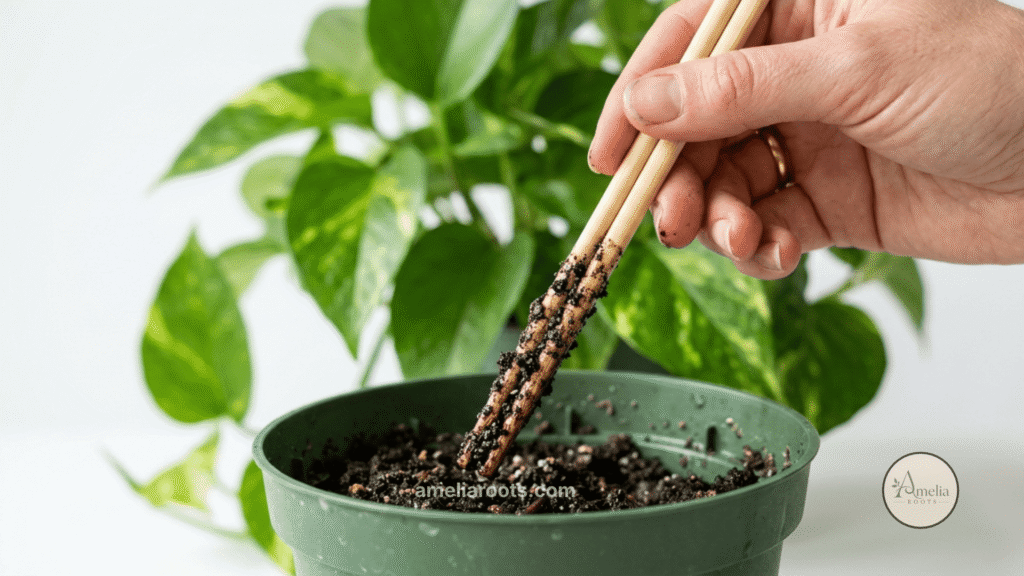
Push a wooden chopstick or skewer into the middle of the pot. Pull it out.
- Clean and dry: that depth is dry.
- Dark, with damp crumbs clinging: wait.
Go to the middle, not the edge. Edges dry first and fib about the rest.
The University of Maryland Extension rule is to wait until the mix is dry about two inches down. In a 4-inch pot, an inch is plenty.
Witness 2 (GO): The weight of the pot
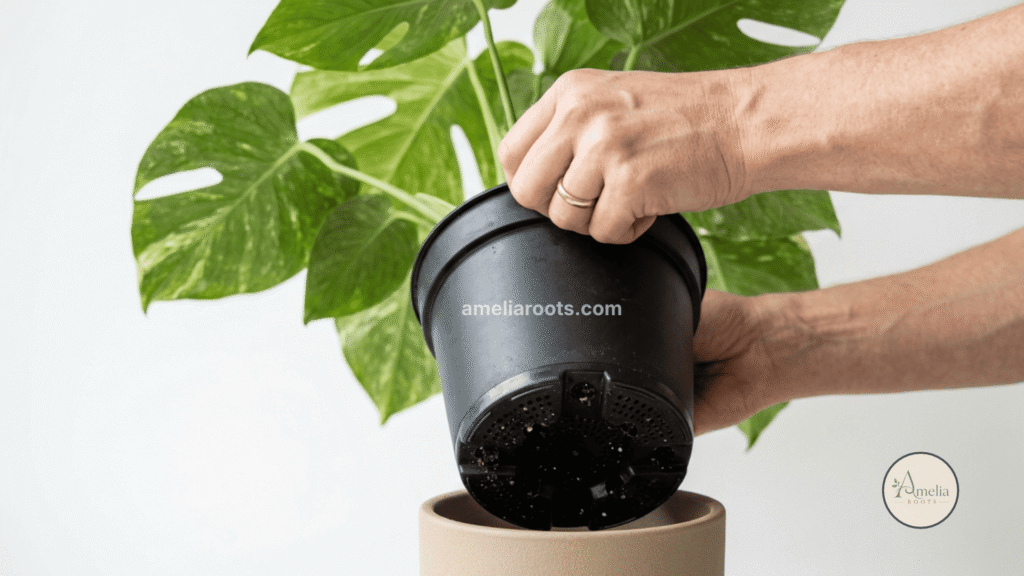
Lift the pot right after a good soak. Memorize that “full” feel.
A few days later, lift it again. Noticeably light means dry.
This one saves you when the plant sits inside a decorative pot. Slide the inner nursery pot out and lift it alone.
Witness 3 (GO): The gap
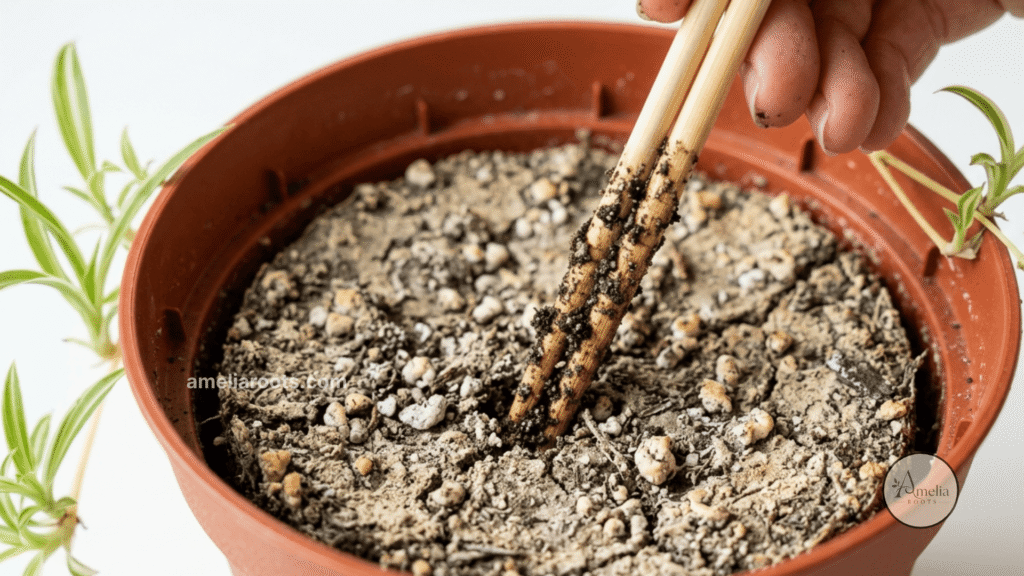
Look at the pot’s edge. A thin gap between soil and wall, or a pale, crusty surface, means the mix has shrunk.
Bone-dry mix can repel water. Pour fast and it races down the gap and out the bottom.
I’ve watched a pot drain happily and still weigh almost nothing.
Try the two-pour method: water a little, wait five minutes, then water again.
Witness 4 (GO, only with Witness 1): The leaves

A thirsty plant looks tired all over. Leaves go dull and soft, and it often perks up within hours of a drink.
An overwatered plant can droop too. University of Maryland Extension says excess moisture shows up as wilting or yellowing of the lower and inner leaves, and can look like drought stress.
| Thirsty | Too Wet | |
|---|---|---|
| Soil | Dry deep down | Damp or soggy |
| Pot | Light | Heavy |
| Yellowing | Crisp edges, brown tips | Soft lower leaves |
| After a drink | Perks up | Stays droopy |
For months I underwatered because I was scared of root rot. My droopy plants were just thirsty.
Never trust a droopy leaf until you’ve touched the soil.
Witness 5 (GO or STOP): The plant’s own habits
Different plants want different levels of dry. “Top two inches” is a starting point, not a law.
University of Florida IFAS Extension says most houseplants are ready when the top inch or so is dry. Some, like succulents, dry out considerably. Others prefer to stay evenly moist.
| Group | Examples | Water When |
|---|---|---|
| Dry-down | Succulents, cacti, snake plant, ZZ plant | Most of the pot is dry |
| Middle ground | Pothos, philodendron, monstera, spider plant | Top 1–2 inches are dry |
| Evenly moist | Peace lily, ferns, calathea | Top inch just starting to dry |
That’s why a peace lily faints dramatically while a snake plant ignores a missed week.
Now picture eight plants at eight different dryness levels, and you at the sink trying to remember which is which.
That’s where most people slip. It’s the problem I made the Indoor Plants Care Kit for.
Grab the Indoor Plants Care Kit — it’s free.
Witness 6 (STOP): The soil’s warning signs
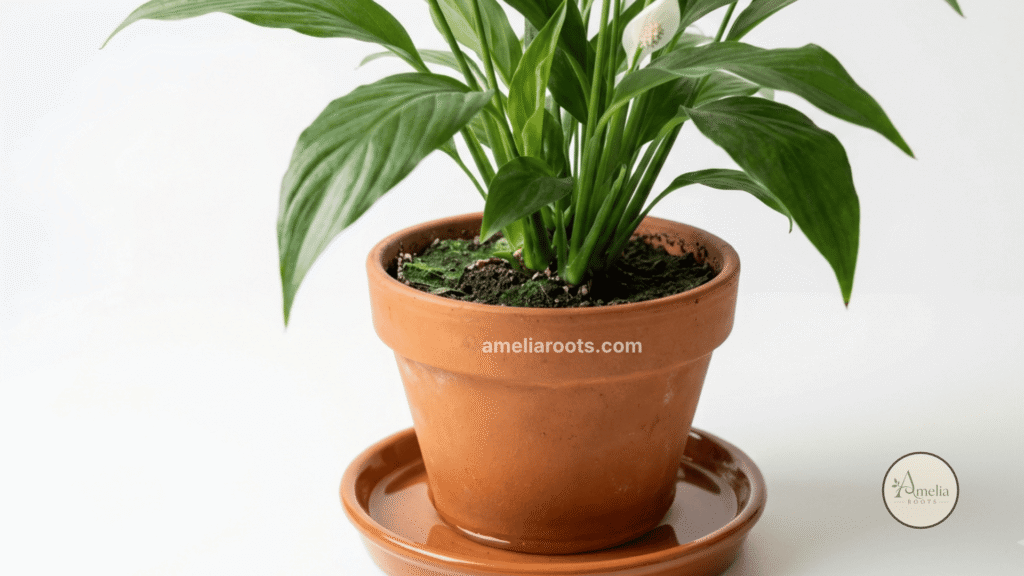
If any of these show up, don’t water, even if every GO witness says yes.
- A musty or swampy smell
- Fungus gnats hovering near the soil
- A green film or white fuzz on the surface
- Water sitting in the saucer or decorative pot
- Soil still dark and heavy weeks later
Check the saucer first. It’s where the problem usually hides.
Soil that stays wet for weeks usually points to a dense mix, low light or an oversized pot. UConn Extension notes that a plant in a pot too big for its roots can’t use all the water the soil holds, and shows overwatering symptoms.
Fix the setup, not just the schedule.
Witness 7 (GO or STOP): The dry-down diary
The question: how long did the soil take to dry last time?
I keep a sticky note under each pot. Date watered, and how many days it took to dry.
That tiny habit shows you when something changes. Shorter days. A cooler room. A heating vent. A new pot.
In winter, nearly every plant slows down. Illinois Extension says to expect to water less often.
Pot material matters too. Illinois Extension notes that unglazed clay pots dry out faster than plastic because clay is porous.
After a repot, I water lighter for the first few weeks while the roots fill the fresh mix.
My rule: two GOs, zero STOPs
One witness can be wrong. A light pot might just be a new plastic pot.
Water only when at least two GO witnesses agree and no STOP witness objects.
| What I See | What I Do |
|---|---|
| Dry 2 inches down, light pot, limp leaves | Water now |
| Droopy leaves, damp soil | Don’t water. Check the saucer and roots |
| Dry on top, pot still heavy | Wait a couple of days |
| Gnats or a musty smell | Don’t water. Fix the setup first |
How to water houseplants once it’s a yes
- Use a narrow-spout can or the sink. Aim at the soil, not the leaves.
- Pre-wet very dry soil, then pause a few minutes.
- Water slowly until it runs out of the drainage holes.
- Let it drain for 10–15 minutes, then empty the saucer. University of Maryland Extension is blunt about it: never let houseplants sit in water.
- Leave it alone until the witnesses say go again.
Small sips every few days wet only the top and keep roots shallow. One slow, thorough watering beats five little ones.
Bottom watering works too. Set the pot in a few inches of water for 10–30 minutes, then lift it out and drain it fully.
I once forgot a pot in the basin for hours. The plant was not amused.
No drainage hole? Keep the plant in a nursery pot with holes and slip it into the decorative one. Lift it out to water, let it drain, then put it back.
Tap water, white crust and brown tips
Ordinary tap water works for most houseplants. Softened water doesn’t.
University of Maryland Extension says softened water carries more dissolved minerals and should be avoided on houseplants.
White crust on the soil, or brown leaf tips, often points to mineral buildup. UMD recommends flushing the soil with plain water every four to six months.
I do it at the sink. Slow, plain water through the pot until plenty has drained out. Then I let it drip fully before it goes back on the saucer.
Quick answers
How often should I water houseplants?
There’s no fixed number. Check first, then decide. In winter, expect it to be less often.
Do I need drainage holes?
I’d say yes. Holes are your safety net against soggy roots.
Is a moisture meter worth it?
Only as a second opinion. The chopstick tells me more.
Does misting count as watering?
No. Misting wets the leaves, not the roots.
What if I already overwatered?
Stop watering, empty the saucer, and move the plant somewhere brighter with airflow. If it keeps declining, slide it out and check the roots. Firm and pale is healthy. Brown and mushy needs fresh mix.
What about vacations?
For about a week, water thoroughly before you leave and move plants out of direct sun. For longer trips, use a wick setup or a plant sitter. Don’t leave pots standing in water for days.
Do this tonight
Pick the plant you worry about most.
Push a chopstick into the middle. Lift the pot. Check the saucer.
Then decide.
Your plant isn’t reading a calendar. Don’t let one decide for you either.
Sources
- Watering Indoor Plants, University of Maryland Extension
- Overwatered Indoor Plants, University of Maryland Extension
- Top 10 ways to kill a houseplant, University of Maryland Extension
- Watering, University of Illinois Extension
- Houseplants, winter watering and humidity, University of Illinois Extension
- Houseplant care, University of Wisconsin Extension
- Watering Houseplants, UConn Extension
- Success with Houseplants: Watering Correctly, UF/IFAS Extension

Content writer and SEO specialist with 3+ years of experience in research-driven digital content. At Amelia Roots, he turns carefully researched indoor gardening information into clear, practical guidance for houseplant owners and home gardeners. His work combines content research, search intent, and reader-focused writing with the site's editorial and subject-matter review process.