
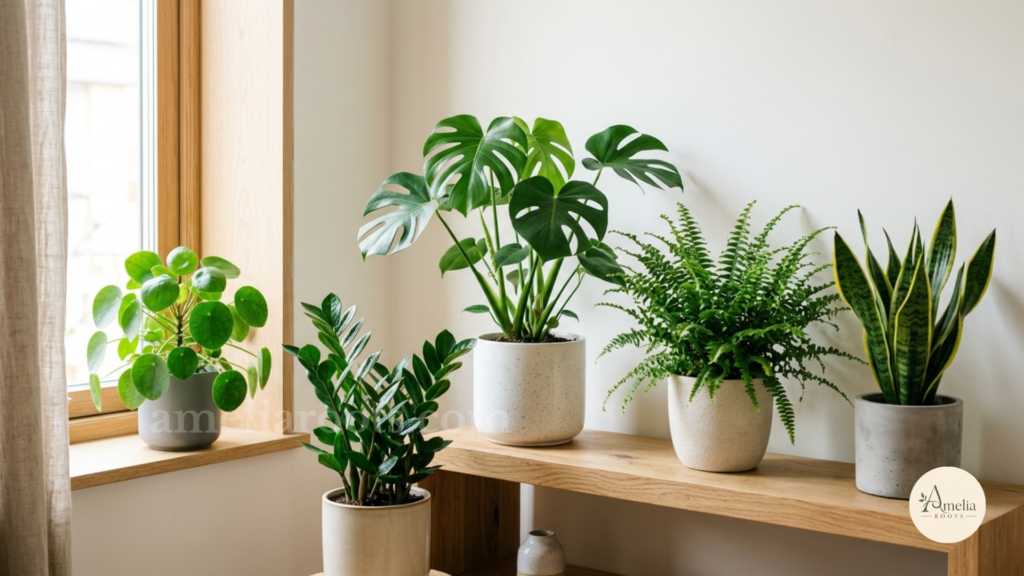
You’ve probably killed a plant. Maybe three.
If you have, you blamed yourself. But here’s what I learned testing 30+ plant varieties: the plant wasn’t the problem. Your environment was.
Most guides tell you what to grow. They don’t explain why certain plants thrive in your home while others slowly suffocate. And they definitely miss the one mistake that kills more plants than anything else.
This guide covers all three.
The Low-Light Lie (And Why It’s Sabotaging You)
Here’s the truth nobody wants to say: There is no such thing as a low-light-loving plant.
I know. The internet is full of “best low-light plants” lists. But here’s what actually happens.
All plants need light for photosynthesis. It’s not negotiable. When light drops, plants create less food. They grow slower. Variegated leaves lose their pattern because the plant redirects energy away from expensive white sections.
What you think is thriving is actually surviving.
I watched this play out: Someone buys a Snake Plant, puts it in a dim corner because they read it was “perfect for low light,” then waits six months for nothing to happen. The plant isn’t dead. It’s just… not living.
Here’s The Reality
In true low light:
- ZZ Plant will technically survive but grow zero new leaves
- Snake Plant will stay exactly the same month after month
- Pothos won’t die, but it won’t propagate either
They’re photosynthetically starving. Slowly.
The Real Solution
Option 1: Accept your plant will survive, not thrive. If you want growth, you need better light.
Option 2: Add a grow light ($20-$30). Seriously. A basic full-spectrum LED light transforms everything.
Not the purple-pink “grow lights” that make your apartment look like a nightclub—I mean white full-spectrum LEDs that look like regular bulbs. One light on a timer changes your entire capability.
That $25 investment opens up a completely different set of possibilities.
Why Your Plant Died (And It’s Fixable)
Overwatering kills more indoor plants than every other cause combined.
This shocked me at first. We’re taught to nurture plants. Watering feels like care. So we water them. A lot.
They respond by rotting.
Here’s the mechanics: Wet soil = no oxygen. Roots suffocate. Fungi colonize dead tissue. Plant dies from roots up.
And here’s the connection to light:
A plant in low light needs dramatically less water than the same plant in bright light.
A north-facing Pothos might need water every 2-3 weeks. The south-facing Pothos needs water every 7-10 days. Most people use the same schedule for both. That’s the mistake.
The Only Watering Rule That Works
Stick your finger 1-2 inches into soil.
If there’s ANY moisture—wait.
If it’s bone-dry—water thoroughly.
That’s it. Not a schedule. Not “every 7 days.” A moisture check.
Pro tip: Some people use clear plastic pots so they can visually check moisture. Others feel the weight of the pot (wet = heavy, dry = light). Both work.
The Big Three: Plants That Actually Deliver
Pothos (Epipremnum aureum)
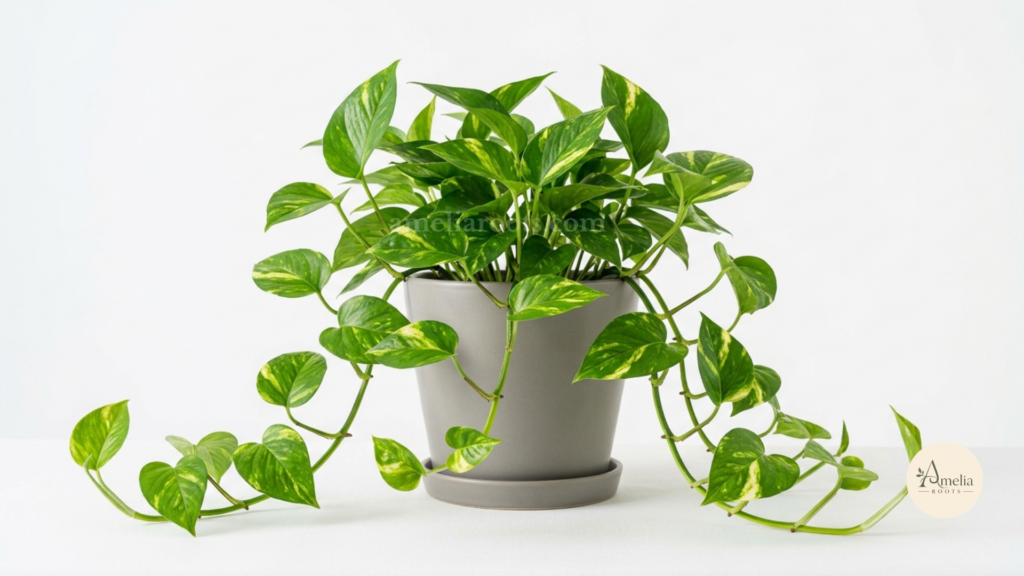
The plant: Heart-shaped trailing leaves. Solid green or variegated (golden, marble). Grows as a climber or trailer.
Why it works:
I’ve seen Pothos survive in a windowless office. Three months of neglect? Still alive. It’s called the “GOAT” of beginner plants for actual reasons.
It’s cheap ($5-$15), propagates ridiculously easily, and looks good anywhere. Most importantly—it builds confidence. Your first success matters.
The real catch:
People overwater Pothos. Yellow leaf = “water more,” right? Wrong. Usually yellow means overwatering. Underwatering shows brown, crispy edges instead.
Also: variegated varieties need more light than solid green. Put golden Pothos in a dim corner and it reverts to all-green as it fights to survive.
Watering schedule:
- Bright light: Every 7-10 days
- Medium light: Every 2-3 weeks
- Low light: Every 3-4 weeks
Water when top inch is completely dry. Cut in half during winter.
The propagation hack:
Cut a 4-6 inch stem below a node. Place in water. Change water every 3 days. Roots appear in 1-2 weeks. Plant in soil.
One $10 Pothos becomes five plants in two months. You’re not just keeping a plant—you’re creating life.
Snake Plant (Dracaena trifasciata)
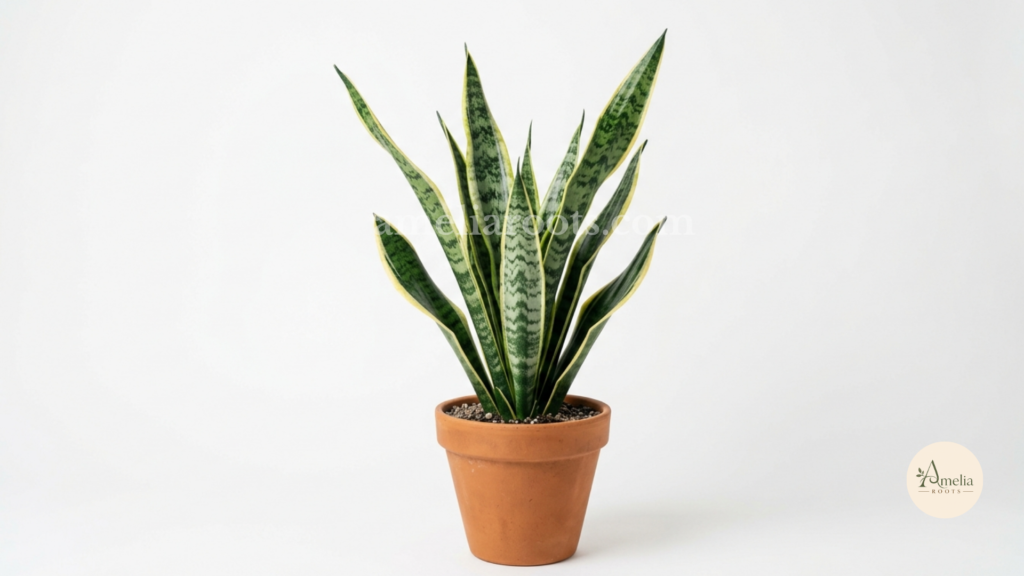
The contradiction:
Half the plant internet says Snake Plants survive anything. The other half says they’re actually desert plants that need bright light and will die if you overwater.
Both are right.
Here’s what I’ve observed: Snake Plants tolerate low light better than most plants. They’ll technically live in a dim corner. But they won’t grow.
Move the same plant into bright light—new leaves appear. Colors deepen. Actual growth happens.
The confusion? Snake Plants are so slow-growing you can’t tell the difference between “barely surviving” and “actually living” for months.
The watering caution (important):
Snake Plants are from deserts. They prefer to dry out. Completely.
I watch people overthink this. They water on a schedule. Every two weeks. The plant dies because soil is still wet from the previous watering.
Real approach: Let soil dry completely. If it’s been three weeks and soil has moisture—wait longer. If it’s been six weeks and bone-dry—water.
Winter? Maybe once every 6-8 weeks.
Propagation (patient people only):
Remove a single leaf. Let it dry for a day. Plant in soil. Wait 2-4 months. Eventually a small pup (baby) emerges.
Slow and feels like nothing’s happening—then suddenly you have a new plant.
ZZ Plant (Zamioculcas zamiifolia)
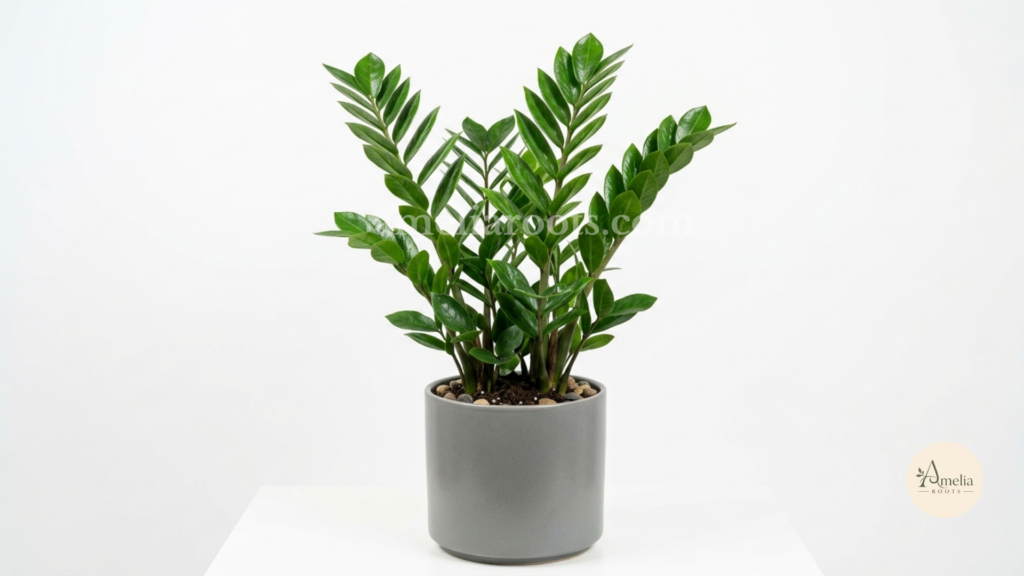
The honest take:
ZZ Plant is boring to most people. Not showy. No flowers. Just green, glossy, and unfussy.
That’s exactly why it works.
I’ve seen ZZ left in dark closets for six months, moved to better light, then respond within weeks with new shoots. I’ve watched them survive neglect that kills most plants.
The yellow leaf mistake (identical to Snake Plant):
Yellow leaves = you’re overwatering. Not underwatering.
ZZ Plants have tubers that hold water. They’re built for drought. Treat them that way.
Real watering:
- Spring/Summer: Every 3-4 weeks when dry
- Fall/Winter: Once a month or less
If you forget to water things—this is your plant.
The growth reality:
ZZ grows slowly. One new stem every month or two. If you want rapid transformation—be disappointed. If you want something reliable that looks good and asks for almost nothing—this is it.
Beyond the Big Three (Quick Profiles)
Spider Plant
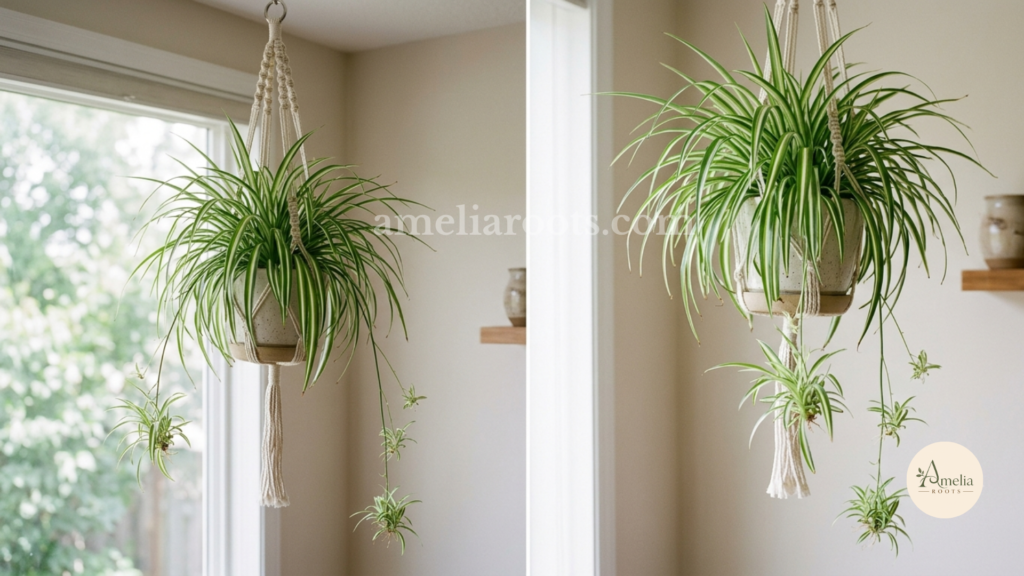
Inconsistent across different homes. Some people keep them thriving. Others watch them decline.
The difference: water quality and humidity. Spider Plants are sensitive to chlorine and fluorine in tap water. Use filtered water. They also appreciate higher humidity in winter.
The superpower: Produces babies (pups) that can be potted while still attached. Free plants. This is why they’re called “friendship plants.”
Care: Weekly watering in bright light. Mist foliage in winter.
Heartleaf Philodendron
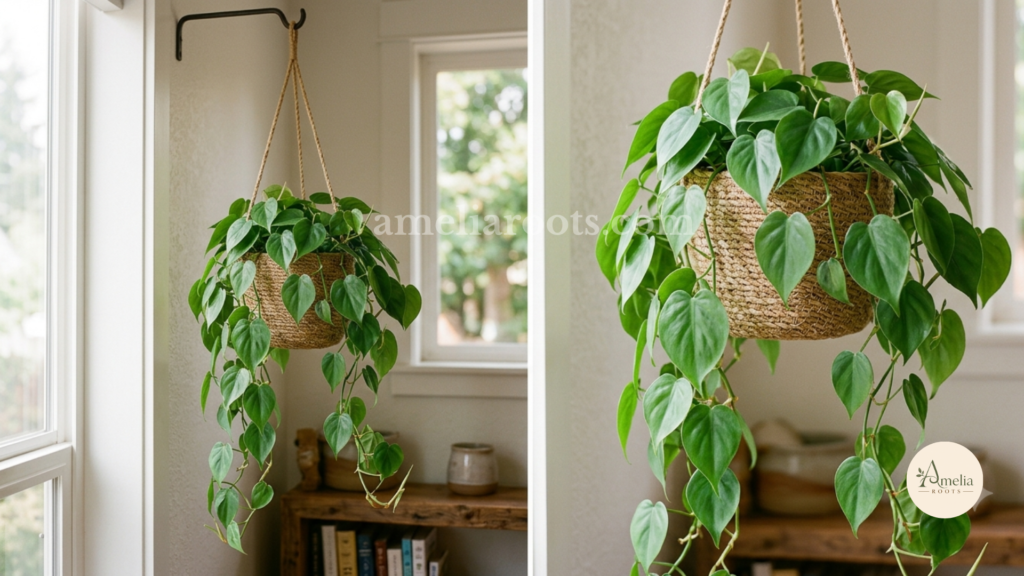
Similar to Pothos. Slightly slower-growing. Equally beginner-friendly.
Trails beautifully from shelves. Some people prefer it because it’s less common.
Care: Same as Pothos—water when top inch is dry. Bright indirect light ideal.
Hoya
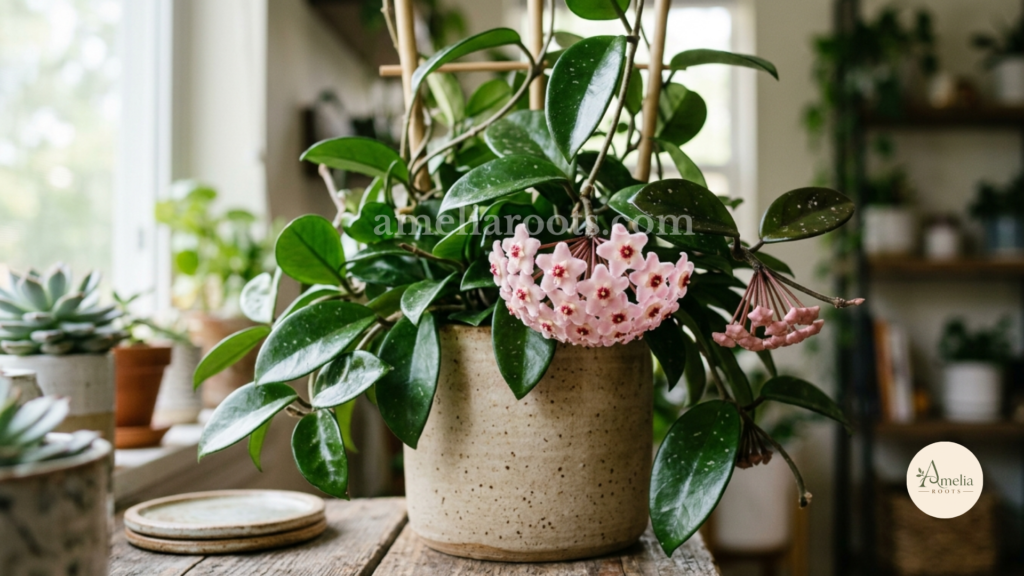
Gaining popularity for good reason. Straightforward care, low pest pressure, produces stunning waxy flowers (takes 2-3 years though).
Why people love it: Extremely long-lived. Can produce plants that last decades. Flowers last weeks.
Care: Let soil dry between waterings. Prefers brightness.
Cast Iron Plant
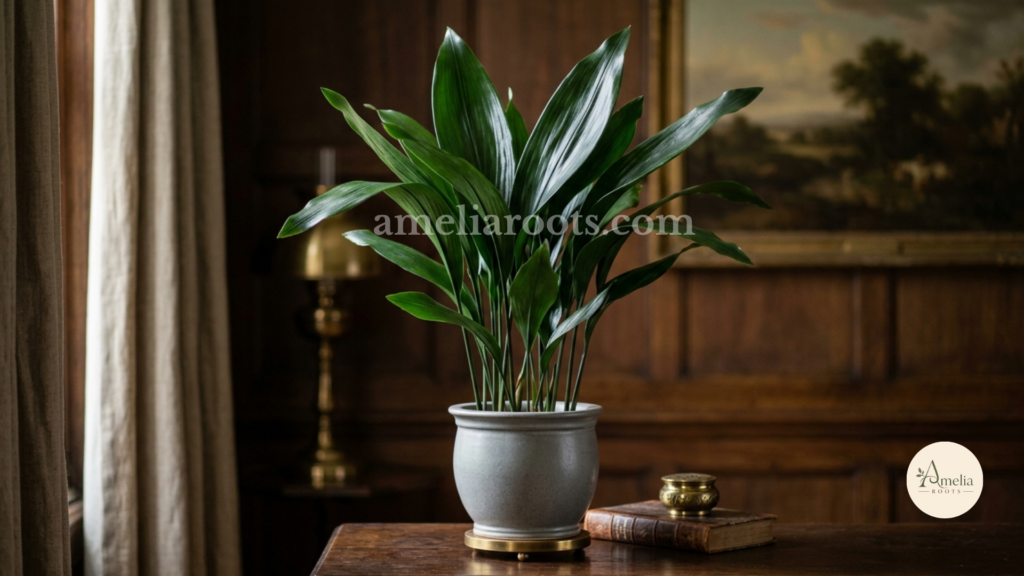
Called “remarkably resilient” in plant communities. Historically grown in Victorian-era coal-heated homes with terrible air quality.
Why mention it: If you have genuinely challenging conditions—dark office, inconsistent care, temperature swings—this handles it better than trendy options.
Real view: Slow-growing, visually understated. But if you want something that genuinely works in tough conditions—this is real.
Pet Safety (What Everyone Misses)
Most guides mention “pet-friendly” casually without explaining what that means.
Pet toxicity isn’t binary. It’s a spectrum.
| Plant | Risk Level | What Happens |
|---|---|---|
| Spider Plant | None | Safe — many cats enjoy nibbling harmlessly |
| Pothos | Low–Moderate | Mouth irritation, mild GI upset if eaten |
| Snake Plant | Low–Moderate | Saponin compounds; mouth irritation possible |
| ZZ Plant | Low–Moderate | Mild GI upset; skin irritation if sap touches skin |
Real guidance:
If you have cats—Spider Plants are genuinely safe. Pothos is low enough risk that most vets say minimal concern if your cat nibbles a leaf.
Same applies to dogs.
If your pet ingests a plant: Contact your vet with the plant name. Most low-toxicity ingestions resolve on their own. Monitor for excessive drooling or vomiting. Actual emergencies are rare.
Your risk is higher from household cleaners than these plants.
Does Air Purification Actually Work?
Every indoor plant guide mentions air purification. Industry standard now.
But here’s the reality.
The NASA Study (1989):
Showed houseplants can remove formaldehyde, benzene, and xylene—in lab conditions, with 15-20 plants in a small room.
Actual homes? Different story entirely.
You don’t have laboratory conditions. You have windows, ventilation, and 2-5 plants. The effectiveness drops dramatically.
The honest assessment:
Plants make a measurable but minor contribution to air quality. They’re not a substitute for ventilation.
But here’s what matters more: Plants improve mental health. Seeing something alive reduces stress. That’s the real benefit.
The takeaway: Prioritize plants that work in your space. Air purification is a bonus, not the reason.
Seasonal Care (What Nobody Covers)
Plants have seasonal rhythms. Your care needs to change with seasons.
This isn’t optional. It’s physics.
Spring (March-May)
Temperature rising, day length increasing—plants sense both.
What happens: Growth acceleration. New leaves emerging.
Your response:
- Increase watering frequency
- Start fertilizing every 2-4 weeks (half-strength)
- Repot plants that have outgrown containers
- Prune leggy growth to encourage bushier plants
Why timing matters: Roots heal fastest in warming temperatures. New growth is vigorous.
Summer (June-August)
Peak growth season. Maximum photosynthesis.
What happens: Rapid growth, highest water use.
Your response:
- Water weekly or more in direct light
- Fertilize every 2 weeks at full strength
- Watch for heat stress in south/west-facing windows
- Mist foliage or group plants for humidity
Why: This is when most problems appear—heat stress, underwatering, pests. You need to be attentive.
Fall (September-November)
Temperature dropping, day length decreasing.
What happens: Growth slows. Plant prepares for dormancy.
Your response:
- Reduce watering gradually
- Reduce fertilizer to monthly, then stop
- Clean leaves to maximize light
- Stop repotting
Why: Overwatering in fall is a major killer. Growth has slowed but people water on summer schedules. Root rot follows.
Winter (December-February)
Shortest days, heating on indoors.
What happens: True dormancy. Minimal growth. Minimal photosynthesis.
Your response:
- Reduce watering by 50% from summer
- Do not fertilize (dormant plants can’t use nutrition)
- Move plants closer to windows
- Group plants together for humidity
Why: Most winter plant deaths happen here. People maintain summer schedules. Soil stays wet. Roots rot.
Yellow Leaves? Brown Tips? Here’s What’s Actually Wrong
Yellow Leaves
Most common cause: Overwatering
The plant is drowning. Roots rotting. Symptom: Yellow leaves everywhere, soft stems, wet soil.
Fix: Stop watering. Repot into fresh, dry soil if smell is musty. Water only when completely dry. Recovery takes 2-4 weeks.
Second cause: Nutrient deficiency
Plant is hungry. Symptom: Older leaves yellow first, veins stay green.
Fix: Fertilize biweekly during growing season.
Third cause: Natural aging
Plant removing old leaves. Normal.
Fix: Remove the yellow leaf.
Brown, Crispy Leaf Tips
Most common cause: Low humidity
Symptom: Crispy (not mushy) brown edges, especially winter with heating on.
Fix: Mist foliage daily, group plants, use pebble trays with water.
Second cause: Mineral buildup
Chlorine/fluorine in tap water accumulates.
Fix: Use filtered water. Flush soil with water every 2-3 months.
Wilting Despite Moist Soil
This is root rot.
Roots are dead, plant can’t absorb water. Symptom: Soft, mushy stems; foul smell; leaves drooping despite wet soil.
Fix: Repot immediately into fresh, dry soil. Remove any black or mushy roots. Recovery takes 2-4 weeks.
Budget-Friendly Collection ($20-30)
The foundation:
- 1 Pothos ($8)
- 1 Snake Plant ($12)
- 1 Spider Plant ($10)
Total: ~$30 for three plants that actually work.
The multiplier:
Within two months:
- Pothos cuttings create 5-10 new plants
- Spider Plant produces 2-3 babies naturally
- Snake Plant leaf propagation begins
You’ve turned $30 into 15-20 plants using only cuttings, water, and soil.
Where to find cheap plants:
- Big box stores (Lowe’s, Home Depot): $5-$8 for smaller sizes
- Facebook Marketplace / Nextdoor: Free cuttings from local plant parents
- Plant swaps: Communities organize exchanges
Real talk: Most expensive part isn’t plants. It’s soil, pots, tools. Focus on propagation. One plant multiplies. That’s where savings compound.
Match Plants to YOUR Situation
Assess your light:
- North-facing window: Lowest light. Choose: ZZ, Snake Plant, Pothos, Cast Iron
- East-facing window: Bright morning light. Works for most plants
- South-facing window: Brightest. Best for most varieties
- No window: You need a grow light
Know your watering habits (be honest):
- “I forget to water.” → ZZ Plant, Snake Plant
- “I overwater everything.” → Same plants, or add perlite to soil
- “I want something that signals when it’s thirsty.” → Spider Plant (droops dramatically)
- “I need to water regularly.” → Pothos, Spider Plant
Don’t fight your own habits. Choose plants that match them.
Pet compatibility:
- Cats/dogs: Spider Plant (completely safe), Pothos (low toxicity)
- Avoiding all risk: Peperomia, African Violet
Your specific situation:
Renter? Moveable plants only. Budget? Propagatable varieties. Beginner? Start with Pothos or ZZ—confidence builders.
The Solution You Actually Need
Here’s why I created the Indoor Plant SOS Guide.
You’ve probably killed a plant. You felt that guilt. You wondered if you’re just “not a plant person.”
You’re not the problem. The information you had was.
Knowing why your plant died doesn’t help when you can’t remember watering schedules or diagnosis steps at 2 AM when you realize your plant looks wrong.
You need a system.
The guide includes:
- Seasonal watering calendar for 12+ plants (all on one page)
- Troubleshooting flowchart (symptom → diagnosis → fix)
- Pet toxicity quick reference
- Propagation timeline (when to propagate, how long it takes, what to expect)
- Printable plant care checklist
It’s the exact system I use when testing new plants. It’s what I reference when something goes wrong. It’s what turns plant killers into plant keepers.
The guide is free. Yours immediately after you confirm your email.
Download the Indoor Plant SOS Guide
You’ve Got This
Start small. One plant.
If you’re unsure about light—choose Pothos. If light is good but you’re an inconsistent waterer—choose ZZ.
The best collection isn’t built in one shopping trip. It’s built over months. Every dead plant teaches you something. Every thriving plant proves you can do this.
Your plants are waiting.
Also Read:
Best Indoor Plants for Complete Beginners?

Content writer and SEO specialist with 3+ years of experience in research-driven digital content. At Amelia Roots, he turns carefully researched indoor gardening information into clear, practical guidance for houseplant owners and home gardeners. His work combines content research, search intent, and reader-focused writing with the site's editorial and subject-matter review process.