
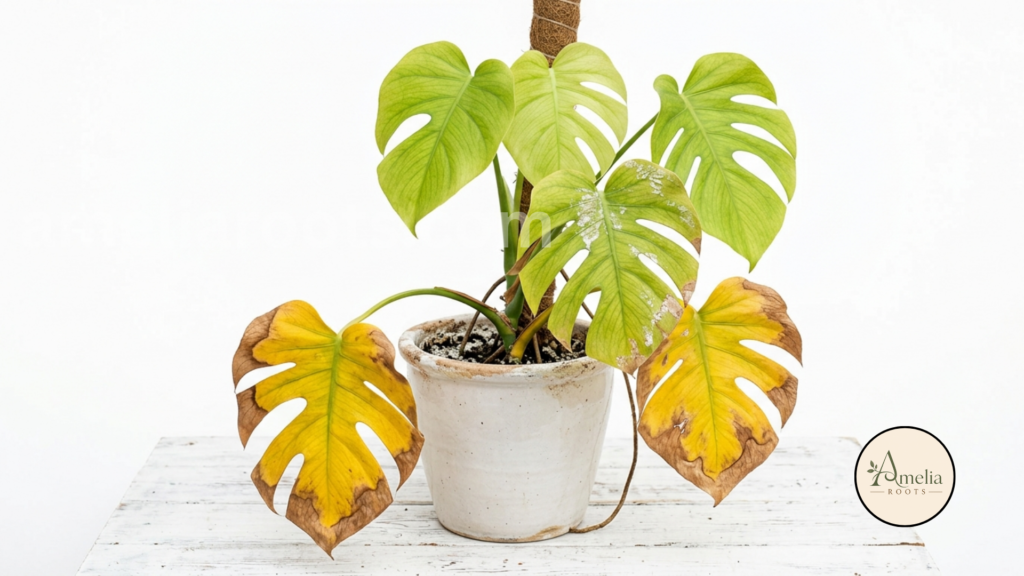
Your monstera’s leaves are turning yellow.
So you do what feels logical: you feed it more.
Within days, the leaf tips turn brown. The edges get crispy. You panic and feed it again, thinking maybe it needs more nutrients.
Now the plant is wilting despite the soil being moist.
You just made a classic mistake—and you’re not alone. In fact, this is the #1 reason experienced growers see people overfeed plants: they treat fertilizer like medicine. A plant looks sick, so they give it more nutrients. But here’s what actually happened: fertilizer had nothing to do with those yellow leaves. And adding more just created a new problem.
Let me tell you what really matters: Before you ever touch a bottle of fertilizer, you need to know whether your plant actually needs it. Most people skip this step entirely.
The One Question That Changes Everything
I’ve tested fertilizer protocols with hundreds of indoor plants across different light conditions, humidity levels, and plant types.
The pattern is always the same.
Plant owners ask: “How often should I fertilize?”
The right question is: “Is my plant actively growing right now?”
If the answer is no—if there’s no visible new growth, no new leaves unfolding, no stem extension—then fertilizer won’t help. It’ll just accumulate in the soil as mineral salts and cause the exact problems you’re trying to fix.
According to the University of Minnesota Extension, overfertilization is one of the leading causes of houseplant decline, often manifesting as salt burn on leaf margins and root damage. The research is clear: more fertilizer doesn’t equal healthier plants indoors.
Here’s the actual decision tree:
- Is the plant actively growing? (New leaves, visible size increase)
- Does it have adequate light for that species?
- Is the soil moist (not wet)?
- Was it repotted recently?
- Are roots, pests, and drainage all healthy?
If all five are yes, then feeding helps. If any are no, fertilizer is the wrong solution.
Why Everyone Gets the “How Often” Question Wrong
The internet is full of advice like “feed every 4 weeks” or “feed weekly at half strength.”
Both can be right. Both can be completely wrong.
It depends on something nobody talks about: How fast is your plant actually growing in your actual home?
A monstera in a bright south-facing window in a warm house? It might use nutrients aggressively and benefit from feeding every 3 weeks.
The same monstera in a north-facing room in a cool apartment? It’s barely growing. Feeding it every 3 weeks is overfeeding.
North Carolina State University Extension confirms this in their houseplant research: nutrient uptake directly correlates with light exposure and growth rate. Low light = slow growth = minimal nutrient demand.
The real rule: Match feeding frequency to visible growth, not to a calendar.
NPK: What You Actually Need to Know (Not the Textbook Version)
Those three numbers on every fertilizer bottle (like 10-10-10) represent nitrogen, phosphorus, and potassium.
Here’s what matters:
Nitrogen = green, leafy growth. Low nitrogen shows as old leaves yellowing first.
Phosphorus = roots and flowers. Low phosphorus rarely shows as a deficiency indoors.
Potassium = overall resilience. Low potassium shows as brown, scorched leaf edges.
The key insight most people miss: A balanced ratio (10-10-10) works for almost every houseplant you own.
You don’t need five different bottles. A single all-purpose liquid fertilizer diluted to half strength covers pothos, monstera, philodendron, peace lily, ferns, and begonias. That’s most home collections right there.
Exception: If you’re serious about orchids (use 3-10-10 monthly during blooming) or succulents (use quarter-strength every 8 weeks, spring only), specialty formulas help. But they’re optional, not essential.
The Biggest Mistake: Fertilizing Dry Soil
This one causes immediate damage.
Never apply fertilizer to dry potting mix. It concentrates mineral salts right next to roots, causing localized burns that look like the plant is dying.
The safe protocol:
- Water the plant normally
- Wait 30 minutes
- Apply diluted fertilizer to already-moist soil
- Let it drain completely
That’s it. The moisture buffer prevents salt concentration and allows roots to absorb nutrients gradually.
What Actually Happens When You Overfertilize
The signs appear fast:
- White crusty buildup on the soil surface or pot rim
- Brown, papery leaf tips within 48 hours of feeding
- Plant wilts despite wet soil (salts dehydrate roots from the outside in)
- Stunted, twisted new growth
- Sudden leaf drop
If this is you, here’s the fix:
Mild case: Flush the soil. Pour room-temperature water through the pot for 30 seconds. Drain completely. Repeat 2 more times over 2 weeks. Don’t fertilize for 6 weeks.
Moderate case: Repot into fresh soil. Gently loosen old soil from roots. Use the same pot size. Wait 4–6 weeks before resuming fertilizer at half your normal dose.
Severe case: Soak roots briefly in water, rinse away old soil, repot into fresh mix. Don’t fertilize for 8 weeks. Recovery takes 2–3 months.
Prevention is easier: Start at half the label’s recommended strength. Record when you feed. When in doubt, skip a month.
Plant-Specific Guidance (The Part Everyone Actually Needs)
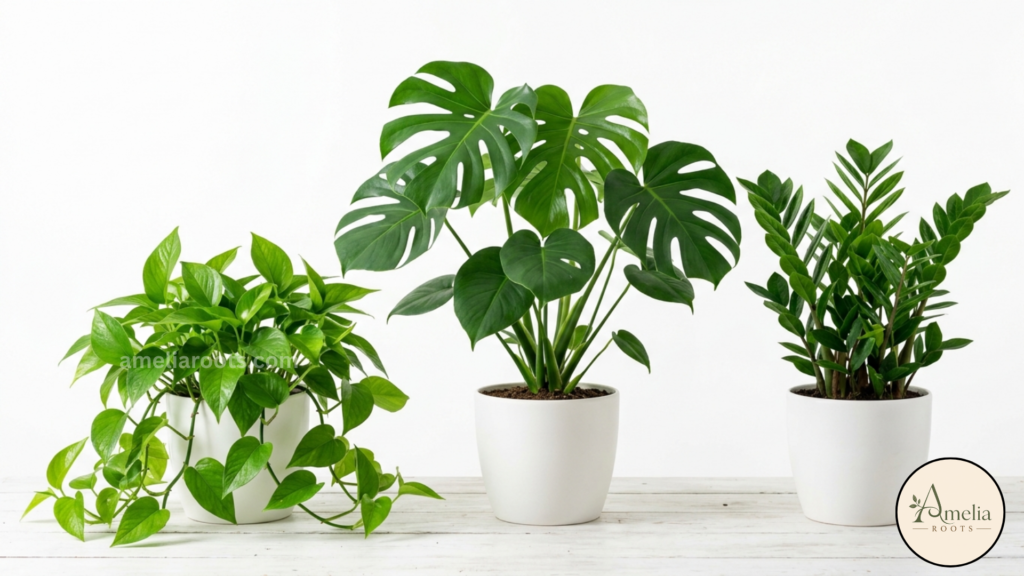
| Plant | Light Needed | Feed Every | Notes |
|---|---|---|---|
| Pothos | Medium-bright | 4–6 weeks | Tolerates light feeding; hard to kill |
| Monstera | Bright indirect | 3–4 weeks (bright light only) | Heavy feeder but needs light first |
| ZZ Plant | Low-medium | 8–12 weeks (quarter strength) | Less is genuinely better; prone to root rot |
| Snake Plant | Low-bright | 8–12 weeks (quarter strength) | Slow grower; overfertilizing causes rot |
| Succulents | Bright | 6–8 weeks (spring only, quarter strength) | Desert plants; minimal nutrients needed |
| Orchids | Bright | Every 2 weeks during blooming (quarter strength) | Use orchid-specific formula (higher K) |
| Calathea | Medium indirect | 6–8 weeks (quarter strength) | Sensitive to water quality; flush monthly |
| Ferns | Medium | 6 weeks (quarter strength) | Prefer weak feeding; tap water can damage |
One addition for all plants: During fall and winter, reduce feeding by half or skip entirely. Most houseplants slow dramatically as daylight decreases. According to the American Horticultural Society, reduced light triggers dormancy in tropical houseplants, which requires minimal nutrient input.
Why Yellow Leaves Might Have Nothing to Do With Fertilizer
This is where diagnosis matters more than feeding.
Yellow leaves could mean:
- Overwatering (most common—soil stays soggy, roots can’t breathe)
- Nitrogen deficiency (old leaves yellow first; new leaves are pale)
- Low light (plant naturally sheds old leaves)
- Root rot (roots smell sour; plant feels heavy despite dry appearance)
- Pests (spider mites cause yellow speckles; check undersides)
The mistake: assuming yellow = deficiency, then adding fertilizer to a plant that’s actually drowning.
Before you feed, diagnose:
Check the roots. Smell the soil. Count the light hours. Check for pests. These four things solve 90% of “why is my plant struggling?” questions.
Fertilizer solves maybe 5% of them.
Quick Wins: How to Actually Do This Right
Liquid fertilizer (most control): Dilute to half the label strength. Apply to moist soil. Record the date. Resume 4 weeks later.
Slow-release granules (hands-off): Mix into soil according to label instructions. Don’t combine with liquid fertilizer. Don’t apply extra “just in case.”
Seasonal timing: Feed regularly spring–summer (plants are growing). Reduce or stop fall–winter (plants are dormant).
Monthly soil flush: Pour plain water through the pot for 30 seconds. This dissolves accumulated mineral salts. Do this monthly to prevent buildup even if you’re feeding conservatively.
The Secret Tool Every Serious Plant Owner Uses
Here’s the honest truth: successful plant owners don’t rely on memory or guessing.
They track what they feed, when they fed it, and what happened next.
A simple system—even just notes in your phone—prevents the two biggest mistakes: double-feeding (feeding twice in one week because you forgot) and neglecting feedback (not noticing your plant’s actual response).
If you want a shortcode-based tracker that does this automatically, one that logs your feeding history, syncs across devices, and reminds you based on your plant’s actual growth—that’s where the Indoor Plants Care Kit becomes useful. It includes a printable feeding checklist organized by plant type, a seasonal dormancy guide showing when plants need less fertilizer, and a plant journal template to track what you feed, when, and the plant’s response. It removes guesswork and gives you actual data.
Grab the Indoor Plants Care Kit — it’s free. A tracker isn’t just nice to have. It’s the difference between a healthy, stable collection and a cycle of overfertilizing and panic.
The Real Skill Isn’t Feeding—It’s Deciding When NOT To Feed
Every plant expert you respect probably skips fertilizer more often than they use it.
They know that a recently repotted plant doesn’t need feeding for 6–8 weeks. They know that a slow-growing plant in low light doesn’t need feeding at all. They know that a plant recovering from root rot needs time and healthy roots, not nutrients.
Fertilizer is the tool you use when everything else is already working.
Light is adequate. Watering is dialed in. Roots are healthy. Drainage is good. The plant is actively growing. Then you add minerals.
That’s the system.
Not “feed every 4 weeks.” Not “follow the label.” Just: is the plant ready to use what I’m giving it? If yes, feed at half strength. If no, fix the real problem first.
Start there. Everything else makes sense after that.
Sources Referenced:
- University of Minnesota Extension – Houseplant Nutrition
- North Carolina State University Extension – Plant Care Research
- American Horticultural Society – Tropical Plant Dormancy

Content writer and SEO specialist with 3+ years of experience in research-driven digital content. At Amelia Roots, he turns carefully researched indoor gardening information into clear, practical guidance for houseplant owners and home gardeners. His work combines content research, search intent, and reader-focused writing with the site's editorial and subject-matter review process.